Balinese Massage Near Me in Kuta Lombok
Find a Balinese massage near me in Kuta Lombok. Learn about techniques, benefits, safety and how to book your local spa treatment.

Meta title: Balinese Massage Near Me in Kuta Lombok | GLAZE
Meta description: Looking for a Balinese massage near me in Kuta Lombok? Compare treatments, learn what to ask, and plan a thoughtful spa visit at GLAZE.
You've arrived in Kuta Lombok after a flight, or returned from the beach with warm skin, tired legs and a head full of the day's plans. You search for a Balinese massage near me and find treatments with similar names but very different descriptions. Knowing what the name can mean, what to ask before booking and how to choose pressure that suits you makes it easier to settle into the right kind of rest.
At GLAZE, House of Wellness, the approach is to help guests make an informed choice, whether they're considering Balinese massage, deep tissue, aromatherapy or reflexology. This guide connects the tradition's cultural roots with real Kuta Lombok itineraries, then covers session expectations, treatment differences and practical safety questions.
Table of Contents
- Why a Balinese Massage Fits Kuta Lombok
- Understanding the Balinese Massage Tradition
- What Happens During a Credible Session
- Choosing Between Balinese Massage and Other Treatments
- What Benefits to Expect Without Hype
- Screen Safely Before You Book
- Plan Your Treatment Around Kuta Lombok
Why a Balinese Massage Fits Kuta Lombok
A day in Kuta Lombok can shift quickly from a quiet arrival to a walk along the shore, a swim or a drive to see the coastline. By late afternoon, the heat and activity may leave you wanting a calm room, measured touch and time away from the bustle. A locally informed massage can fit naturally into that pause, but the best choice depends on how you feel and what kind of experience you want.

The phrase Balinese massage can refer to a bodywork tradition and, in everyday spa listings, to a broad style of session. One therapist may lean into flowing palm strokes and gentle stretching, while another may use more focused pressure. Rather than assuming every treatment follows an identical sequence, treat the name as a starting point for a conversation.
At a premium day spa such as GLAZE, warm oils, a quiet setting and unhurried care can help make the appointment feel distinct from a quick stop between activities. You can explain whether you want to unwind after travel, ease into rest after a beach day or focus on a particular area of muscular tightness. The therapist can then discuss which service and pressure level might suit your preferences.
The useful question is not whether a spa offers Balinese massage. Ask what the session typically includes, whether the pressure can be adjusted by body area, and whether the therapist will check your comfort during the treatment. Those answers matter more than a long list of technique names.
Understanding the Balinese Massage Tradition
Balinese massage is best understood as a family of Indonesian bodywork practices, not one fixed recipe. Two sessions may share the same name yet differ in rhythm, pressure and technique according to the therapist, local context and guest's preferences.
Accounts of the tradition connect its development with indigenous Balinese healing, Hindu and Buddhist influences introduced through regional trade, Indian Ayurvedic practices involving oils and energy balance, and Chinese pressure-point methods. Dutch medical and anthropological documentation began recording Balinese healing practices in the 1930s, an important milestone in how locally transmitted knowledge became described beyond its original settings (historical overview of Balinese massage).
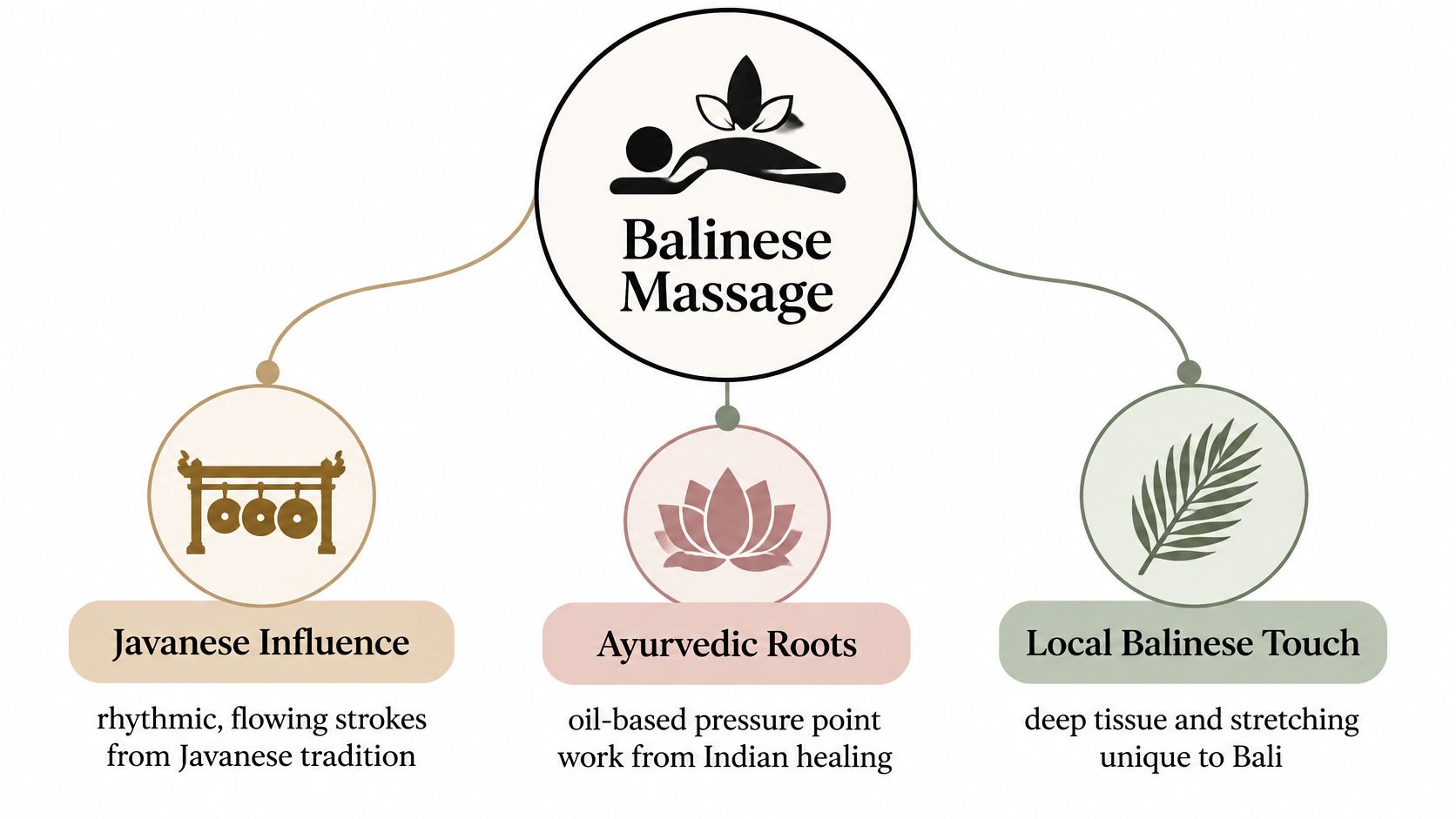
As Bali developed into an international tourism destination in the 1970s and 1980s, Balinese massage moved from village and household settings into hotels and resort wellness programmes. That shift helped introduce the treatment to visitors, but it also meant the name could come to describe a wider range of sessions. Related adaptations developed on neighbouring Indonesian islands. In Lombok, a Balinese-style treatment may also reflect local Sasak or other regional influences.
What the name may include
Commonly associated elements include rhythmic palm pressure, deeper strokes, acupressure-like point work, stretching, aromatic oils and full-body relaxation. These elements don't have to appear in the same order or at the same intensity in every appointment.
A useful comparison is a family of dishes: shared roots and familiar ingredients don't guarantee one exact recipe. In the same way, a therapist's training and your preferences shape the treatment. Ask how they interpret Balinese massage, whether they use stretching or focused point work, and whether oils are part of the session.
That conversation helps set expectations without asking a practitioner to follow a supposed universal checklist. It also lets you understand whether the treatment is intended as a gentle, relaxation-oriented experience or includes firmer work.
What Happens During a Credible Session
A thoughtful session begins before you get on the treatment table. The therapist should ask about your health history, areas of concern, preferred pressure and any techniques or areas you'd like to avoid. This intake helps the therapist decide whether to adapt the session, recommend a different option or suggest postponing.
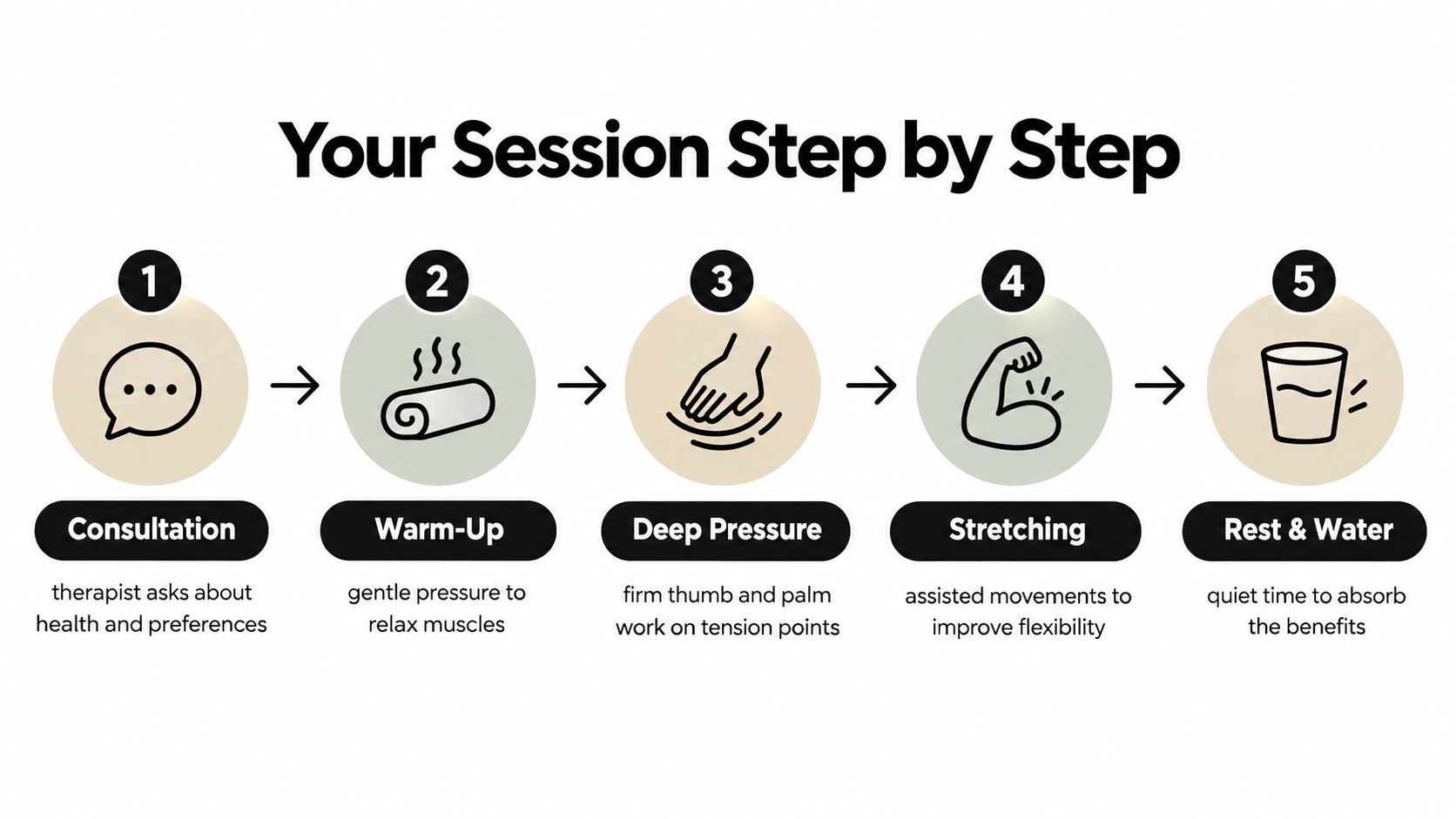
A clear sequence, with room to adjust
The therapist should explain the proposed approach and obtain your consent. Consent isn't a one-time formality. You can ask questions, decline a technique or change your mind during the appointment, and a considerate therapist should respond without pressure.
The session may begin with lighter gliding strokes before moving into kneading, acupressure-like work, stretching or moderate-to-firm compression. This gradual approach gives both of you a chance to assess how the pressure feels. A practitioner should check in and adjust when you ask, rather than treating discomfort as a goal.
A firm sensation isn't automatically harmful, but therapeutic intensity isn't the same as tissue injury. Mild tenderness or a gentle stretch can feel different from sharp pain, numbness, tingling, dizziness or discomfort that keeps increasing. If any of those warning signs appear, ask the therapist to pause and reassess immediately.
Pressure check: Describe what feels right for each area. You might prefer firmer work on your shoulders and lighter touch on your legs.
Near the end, the therapist can check how the treatment felt and leave you time to get up slowly. After a long flight, beach day or active outing, leave room in your plans to rest rather than rushing straight into another demanding activity. Hydrate normally, and remember that massage isn't a substitute for assessment when pain is persistent, acute or unexplained.
For a closer look at the flow of a massage appointment, watch the session overview below.
Choosing Between Balinese Massage and Other Treatments
The right treatment depends on the experience you want, not on which label sounds most intensive. Services can overlap, and a therapist may adapt elements after speaking with you. Describe your priorities and ask how the practitioner will tailor the session.
Choosing a massage or body therapy
| Treatment | Primary Experience | Technique Emphasis | Best Question to Ask |
|---|---|---|---|
| Balinese massage | A broad, full-body reset | Flowing strokes, kneading, point work and possible stretching | “How do you balance relaxation and firmer pressure?” |
| Deep tissue | Focused work on areas of muscular tightness | More sustained, targeted pressure | “Can we agree on pressure separately for each area?” |
| Aromatherapy | A slower, sensory-led session | Massage with aromatic oils | “Which oils do you use, and can I request an unscented option?” |
| Reflexology | A more focused foot-centred treatment | Pressure applied to areas of the feet | “Is this treatment focused mainly on the feet?” |
Match the treatment to the day
After sightseeing or a relaxed return from Kuta Beach, you might want a broad, calming treatment. Balinese massage can be a natural starting point if you're comfortable with a blend of flowing movements and adjustable pressure. Tell the therapist whether you want a quieter, lighter experience or would like attention to specific areas.
If you've been active and are mainly concerned about muscular tightness, ask about deep tissue rather than assuming a Balinese session will provide sustained, targeted pressure. A guest who values scent and a slower ritual may prefer aromatherapy, while someone looking for focused attention on tired feet can ask about reflexology.
The labels won't tell you everything. Two providers may interpret a treatment differently, and a therapist may be able to adjust pressure, focus or technique. Before you reserve, ask how the session begins, whether you can request changes during the appointment and what you should disclose about recent activity or discomfort.
Useful booking detail: Explain the outcome you want in plain language, such as “gentle and relaxing” or “firmer work on my shoulders, but light pressure on my legs.”
What Benefits to Expect Without Hype
Massage can be a welcome pause in a busy trip. Guests often seek a sense of relaxation, comfort and time to unwind after travel, beach outings or a day in the heat. They may also value noticing how their body feels after activity and having a quiet interval before dinner or another excursion.
Those experiences are personal, not guaranteed medical results. A grounded description might say that a treatment is designed to support relaxation or help you feel more at ease after travel. Claims that a session cures a condition, heals an injury or detoxifies the body promise more than a spa massage can reliably deliver.
Comfort isn't a diagnosis
The distinction matters if you're choosing between relaxation and care for a health concern. Massage may be enjoyable for general tiredness, but it shouldn't replace professional assessment for persistent, acute or unexplained pain. If you're worried about a symptom, speak with a qualified medical professional rather than asking a therapist to apply deeper pressure.
Be thoughtful about promises that sound sweeping or certain. A careful provider can explain what the treatment involves, ask about your preferences and be clear about its limits. That transparency helps you choose a session for the experience it can reasonably offer.
Screen Safely Before You Book
A credible therapist needs enough information to make a sensible treatment plan. Tell the provider about circumstances that could affect pressure, positioning or whether a session should go ahead. These include fever or contagious illness, acute inflammation, recent trauma or surgery, open wounds, burns, bruising, unstable fractures and skin infections.
Other concerns may call for avoidance, referral or adapted techniques. These include a history of phlebitis or deep-vein thrombosis, swelling that could suggest a clot, reduced sensation such as diabetic neuropathy, and medication that increases bleeding or affects bone or connective tissue. Relevant heart, kidney or liver conditions should also be disclosed.
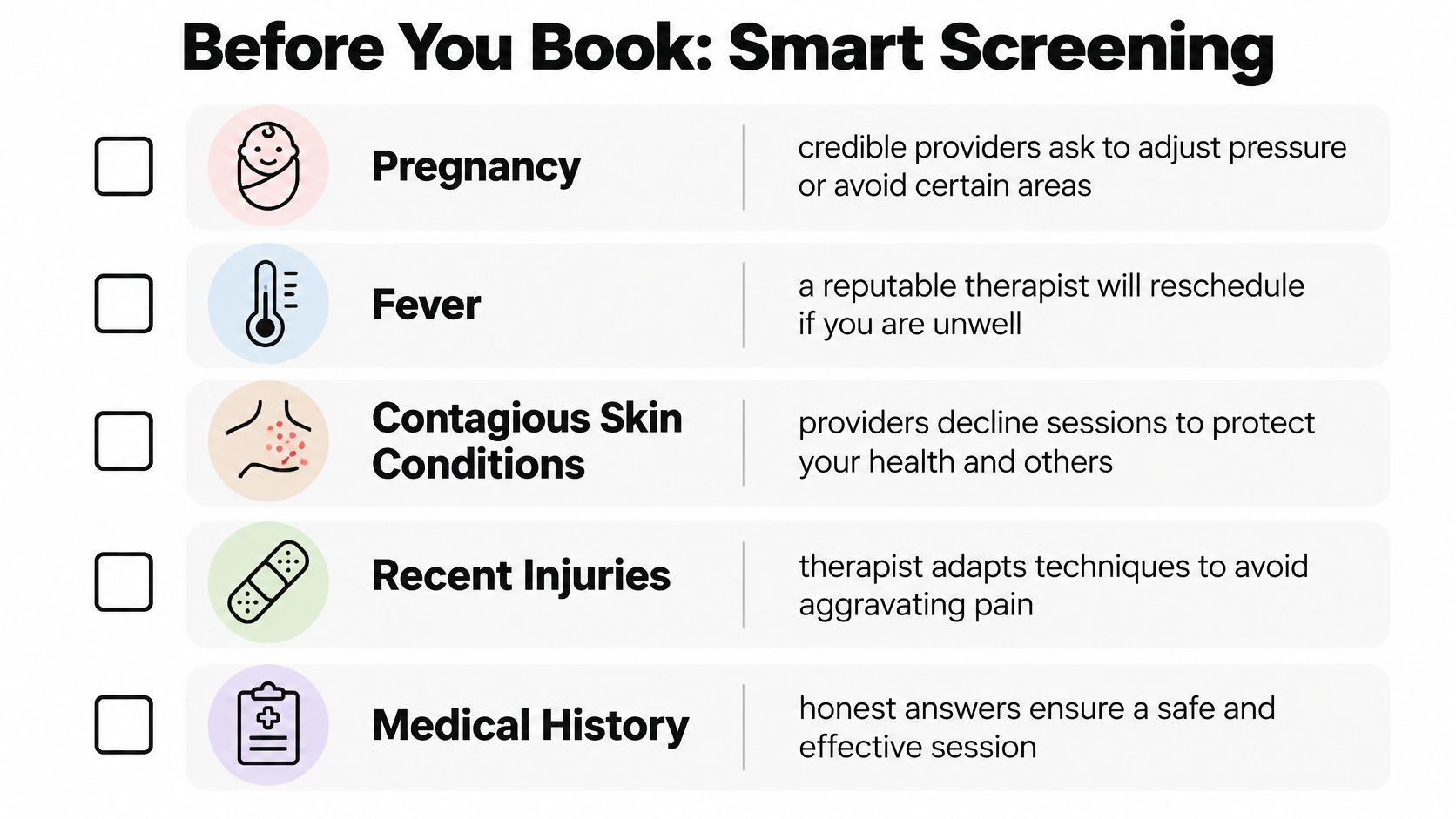
What to share before your appointment
Use this checklist when you contact a spa or speak with your therapist:
- Pregnancy: Share your stage of pregnancy and ask what adjustments the provider makes. Deep sacral or abdominal work should be avoided in the first trimester; abdominal massage during pregnancy requires medical or midwife authorisation.
- Recent travel or swelling: Mention a recent flight if you have new leg swelling or other concerning symptoms. Deep leg massage can be dangerous when a deep-vein thrombosis hasn't been recognised.
- Injury or surgery: Explain what happened and when. A therapist may need to avoid an area, modify the technique or recommend that you seek medical advice before booking.
- Health conditions and medication: Disclose reduced sensation, relevant heart, kidney or liver concerns, and medicines that can increase bleeding or affect bone or connective tissue.
- Illness or skin changes: Report fever, contagious illness, open wounds, burns, skin infection, unexplained bruising or acute inflammation. If you're unwell, postpone the session.
Research on massage during pregnancy remains limited, and a review notes that some studies excluded people with complicated pregnancies or pre-existing conditions. The review also reports temporary soreness, headache, tiredness, dizziness and worsened musculoskeletal symptoms, and cautions about deep leg massage when a clot may be unrecognised (review of massage during pregnancy). For a high-risk pregnancy, discuss massage with a clinician before booking.
Stop the session and ask for reassessment if you feel sharp pain, numbness, tingling, dizziness, escalating discomfort or other neurological changes.
If symptoms are acute, persistent or unexplained, seek medical assessment rather than requesting more intense bodywork. A good provider will take your concerns seriously and explain when they can adapt a treatment, when they should decline and when you need professional medical advice.
Plan Your Treatment Around Kuta Lombok
Kuta Beach gives visitors a clear starting point for planning their stay. Destination information places it about 60 kilometres south of Mataram and around 30 minutes by road from Lombok International Airport (Kuta Beach visitor information). If you're arriving by air, you may prefer to settle in before booking bodywork. If you're coming from Mataram, leave room for the transfer before committing to an appointment.
For a beach-focused day, Tanjung Aan is about 10 minutes from Kuta Beach and stretches for approximately 2 kilometres. Its relatively calm waves and shallow water are described as suitable for swimming and snorkelling (Tanjung Aan Beach visitor information). Plan time to return to Kuta and freshen up before a treatment, especially if you've spent the day in the sun.
Mandalika offers another itinerary anchor. The Mandalika International Circuit in Kuta Village, Central Lombok, measures 4.31 kilometres and has 17 turns (Indonesia's official tourism information). Mandalika is part of a 1,250-hectare special tourism economic zone on Lombok's south coast, with access to Tanjung Aan, Kuta, Gerupuk, Serenting and Seger (Mandalika destination overview). Selong Belanak can also be part of a wider Lombok itinerary; leave your travel plans flexible and reserve treatment time when you know how the day has unfolded.
After exploring, choose a Balinese massage for a broad reset, deep tissue if you want to discuss more focused pressure, aromatherapy for a slower sensory experience or reflexology for foot-focused work. At GLAZE, guests can also consider cleansing, hydrating and anti-ageing facials, manicure, pedicure and nail care, and relaxation and wellness treatments, then pause at the on-site specialty coffee and matcha bar.
Book your treatment at GLAZE when you're ready to plan a considered pause in your Kuta Lombok stay. Choose a service, share your preferences and ask about any health considerations before confirming your appointment.
GLAZE, House of Wellness, Jl. Raya Kuta No. 20, Kuta, Central Lombok, NTB 83573.
Visit GLAZE - House of Wellness to reserve a Balinese massage, deep tissue, aromatherapy or reflexology session in Kuta Lombok. You can also plan a facial or nail treatment and enjoy the on-site specialty coffee and matcha bar as part of an unhurried wellness stop.
- balinese massage
- kuta lombok
- lombok massage
- spa booking
- massage safety