Full Body Massage Etiquette: A Calm, Complete Guide
Full body massage etiquette made simple. Learn what to wear, draping norms, tipping, and aftercare for a relaxed treatment in Kuta Lombok.
You've spent the day between Kuta Beach and the road through Kuta Lombok, with warm sand around your ankles, sunscreen on your shoulders and the pleasant fatigue of island exploring in your body. At the spa door, the pace changes. Full body massage etiquette gives you a quiet framework for that transition, from booking and arrival to privacy, pressure, tipping and the gentle hours after treatment.
The best experience feels natural rather than formal. In Lombok's humidity, an open treatment-room door may let in a soft breeze, while clean linen, low light and a calm welcome help you settle. This guide follows your body clock through the visit, so you'll know what to do before leaving your hotel, what to expect on the table and how to carry the calm into the rest of your day.
Table of Contents
- Stepping Into Your Treatment
- Before You Arrive
- Undressing and Draping with Confidence
- Speaking Up During the Session
- Tipping and Settling the Bill
- Aftercare and Carrying the Calm Forward
Stepping Into Your Treatment
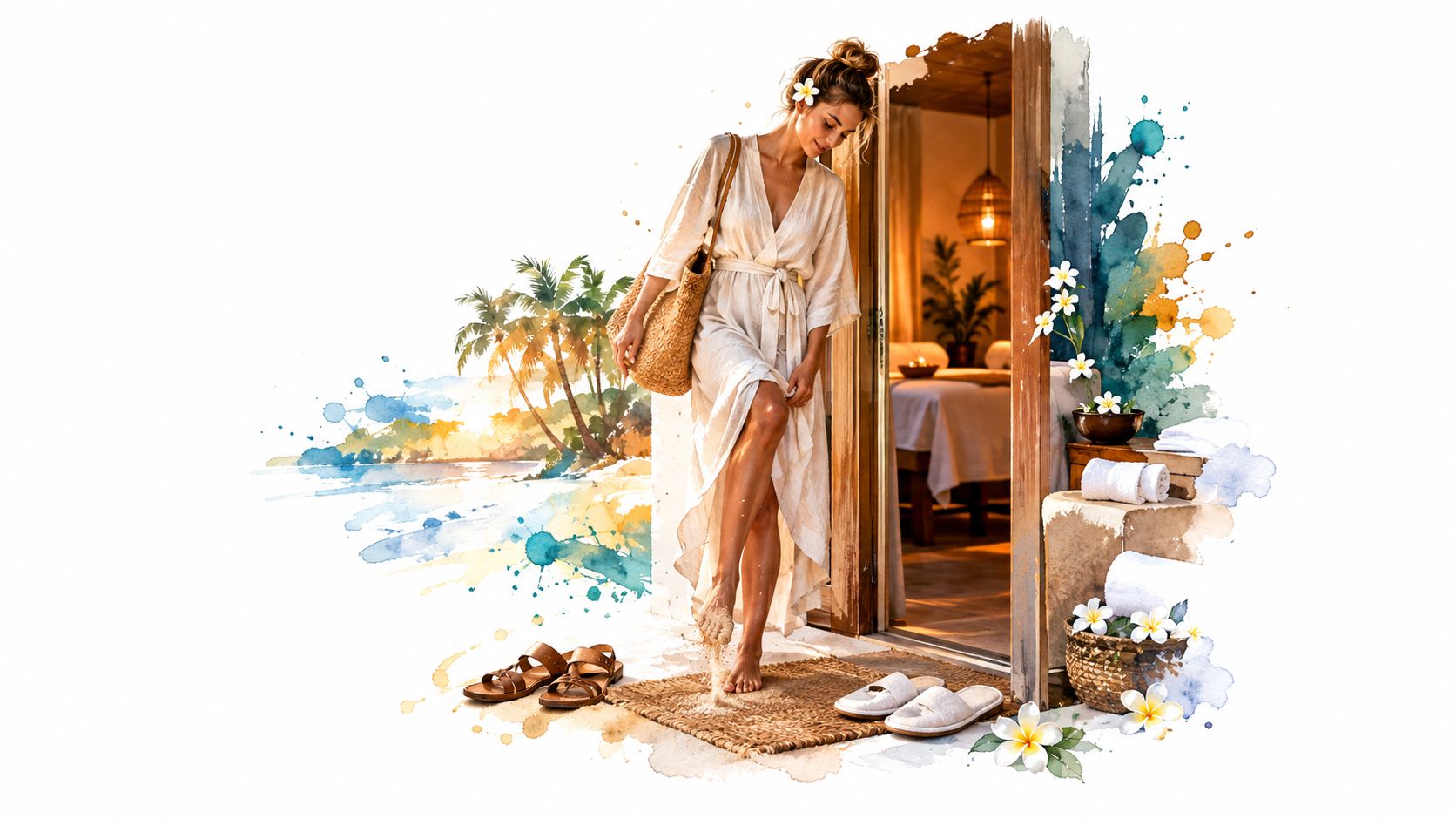
A traveller arrives after a morning at Tanjung Aan, shakes the sand from their feet and pauses before entering the spa. The beach day is still on their skin, but inside there are fresh sandals, cool water and the quieter scent of linen. That small pause is where full body massage etiquette begins. It isn't a collection of stiff rules. It's the practical language that helps a guest and therapist create a comfortable, professional treatment together.
At GLAZE, House of Wellness, the same principle applies whether you're considering a Balinese massage, deep tissue, aromatherapy or another relaxation and wellness treatment. You should understand what you've booked, feel able to ask questions and know that your privacy matters. Professional standards from the National Certification Board for Therapeutic Massage and Bodywork place dignity, informed consent, hygiene, communication and appropriate draping at the centre of practice. The American Massage Therapy Association's treatment guidance similarly describes mutual respect, confidentiality and covering the body except for the area being worked on as basic expectations.
The quiet rhythm of a well-run visit
Your visit has a simple arc:
- Before treatment: Confirm the massage style, timing, therapist preference and anything the practitioner should know.
- On arrival: Allow space to check in, silence your phone and move out of the heat and sightseeing rhythm.
- At the table: Discuss pressure, boundaries and areas to avoid before the first stroke.
- During the massage: Give clear feedback about pressure, temperature, music and conversation.
- At the end: Settle the bill, consider the local tipping custom and stand up slowly.
- Aftercare: Give your body a calm landing before returning to scooters, surf or a full Lombok itinerary.
The useful rule: You never need to tolerate uncertainty in silence. A good therapist would rather receive a clear request than guess.
That slower approach suits Kuta Lombok. Whether you've come from Mandalika, Selong Belanak or a nearby hotel, the treatment works best when you stop trying to fit it between activities. Start with the details that make arrival feel unhurried.
Before You Arrive
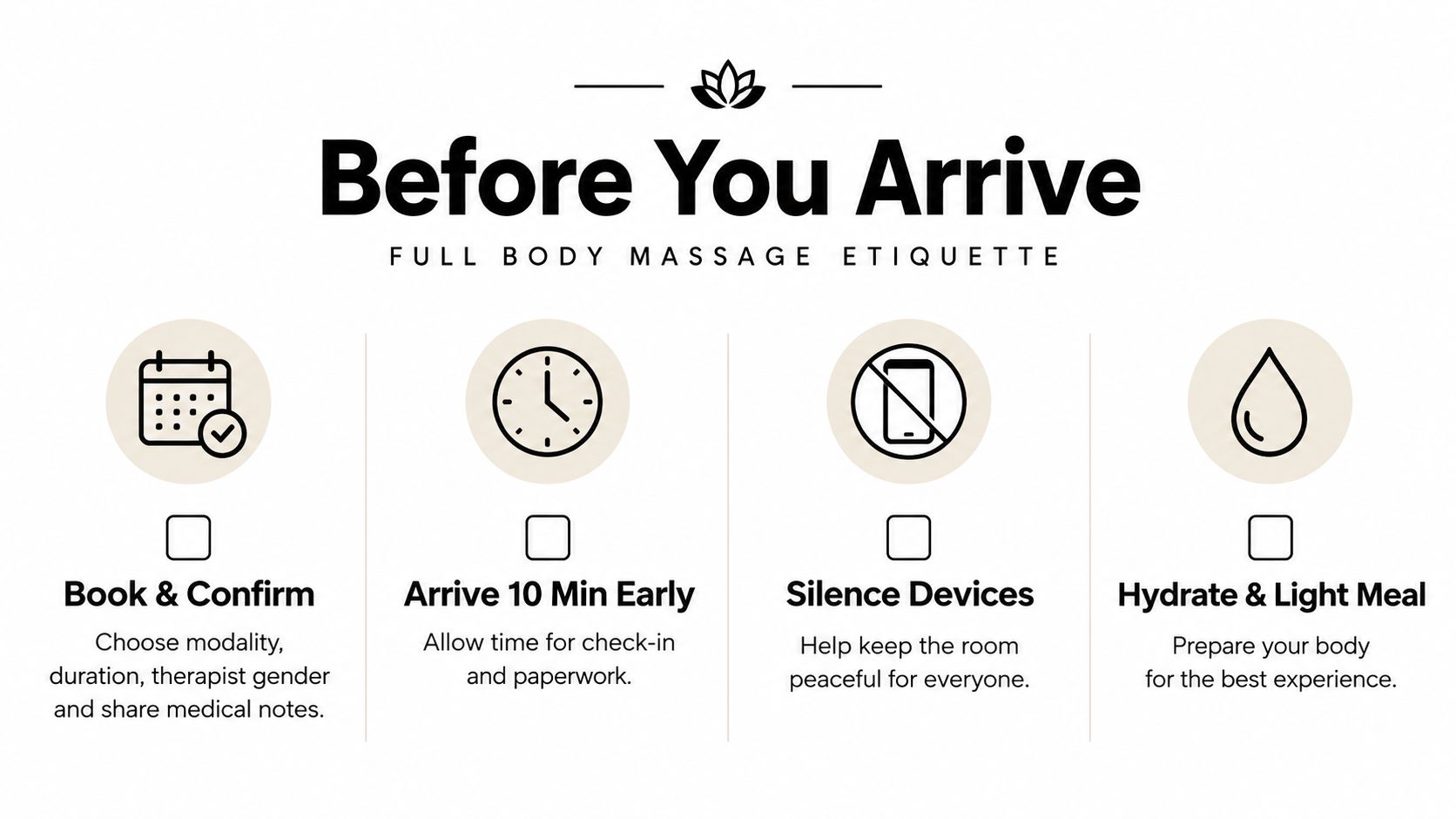
A treatment in Kuta Lombok starts before you reach the spa. Book with enough detail to prevent confusion later, especially if you are choosing between Balinese massage, deep tissue, aromatherapy or reflexology. Confirm the treatment, duration, therapist gender preference if you have one, and any medical notes or areas the practitioner should avoid.
Build arrival time into the day rather than fitting the appointment between beach plans. Aim to arrive ten to fifteen minutes early so you can check in, answer intake questions and change without rushing. Coming from the beach requires a little more time. Cool down, dry off and remove heavy sand or seawater before lying on the table.
A practical pre-treatment checklist
- Eat lightly: A light meal is more comfortable than a heavy Lombok feast immediately before treatment. Skip alcohol beforehand as well.
- Drink water: Arrive reasonably hydrated, but avoid forcing a large amount just before lying down. Drink some before leaving and plan to drink again after the session.
- Choose simple clothing: Loose cotton, relaxed trousers, a soft top or an easy dress makes changing straightforward. Leave jewellery, watches and valuable accessories at your room where possible.
- Tie back long hair: This keeps your neck and face comfortable during back, shoulder and facial work.
- Reduce strong sunscreen: After time at Kuta Beach, remove excess sunscreen where practical. Heavy products can affect massage oils and the therapist's grip.
The phone belongs outside the treatment mindset. Silence it before entering, then keep it out of the treatment room and wellness areas. Spa etiquette guidance from SpaSeekers recommends switching phones off or setting them to silent and keeping treatment rooms free from phone use so other guests can relax.
Use the final minute to change pace. You do not need to arrive serene. You need enough time to stop being a beachgoer, driver or itinerary manager and become a guest receiving care. That small pause helps your body settle before the massage begins.
Undressing and Draping with Confidence
A calm arrival continues once you enter the treatment room. The therapist should explain the changing process before stepping out, then provide a robe, towel or sarong. Undress only as far as feels comfortable. Some guests remove everything, while others keep underwear on. Both choices are appropriate, and neither should change the professional standard of care.
The therapist should leave while you change. Place your belongings where they will stay secure, lie on the table under the sheet or towel, and wait for a knock or clear signal before they return. In Lombok, a sarong may feel familiar, especially after time at the beach, but it serves the same purpose as any professional covering. The room should feel private, warm and settled.
What proper draping looks like
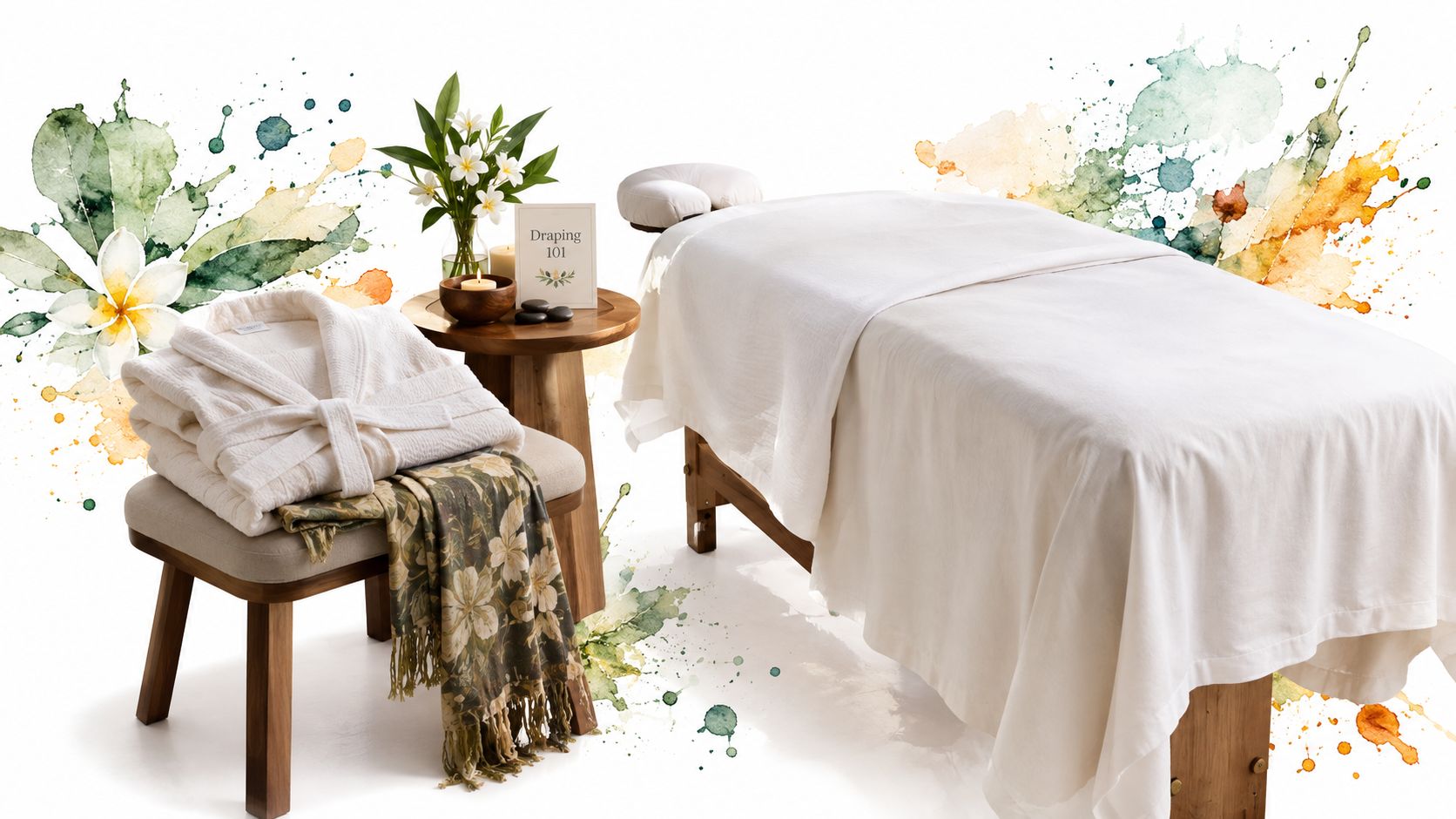
The sheet covers your body while leaving only the area being treated accessible. After working on your back, leg or arm, the therapist covers that area before moving elsewhere or asking you to turn. Guidance from the AMTA's draping standards says the covering should be secured so it does not shift easily, and that only the working area should be exposed.
Breasts, genitalia and the gluteal cleft remain covered. A therapist may ask whether you want work around the gluteal muscles or inner thighs, but the question should be clear, professional and based on your consent. You can decline, keep your underwear on, or request work limited to your back, legs, shoulders, arms and feet.
Set your boundaries before the first stroke
State preferences before the massage begins:
- “I'd like to keep my underwear on.”
- “Please avoid my glutes and inner thighs.”
- “I'm comfortable with this area, but not that one.”
- “Please explain before changing position or technique.”
- “I'd like the room warmer and the sheet tucked more securely.”
These requests are part of a well-run treatment. Consent should be voluntary, informed and ongoing, rather than a single question at reception. If the sheet slips, the room feels too open, or a touch feels inappropriate, ask the therapist to stop and adjust immediately. A professional practitioner will respond calmly and respect the boundary without asking you to defend it.
Speaking Up During the Session
A massage isn't a silent test of endurance. The therapist reads your breathing, muscle tone and movement, but you're the person who knows whether the pressure feels useful, excessive or unsuitable. The most effective sessions use short, timely feedback rather than a long explanation after discomfort has already built.
Before starting, ask how the therapist describes pressure. A 1–10 scale can make the conversation easy, but the number matters less than the response. If a stroke lands too intense, say “lighter” at once. If the contact barely registers, ask for more pressure. Massage etiquette guidance from More Time to Travel supports asking for lighter pressure, quieter treatment or other adjustments when needed.
Small signals are useful, but words are better
A clenched hand, held breath or repeated shift on the table may suggest discomfort. Don't rely on the therapist noticing every signal, particularly when music, towels or the sound of an open door soften the conversation. Use direct language:
- “That pressure is too strong.”
- “Please stay lighter around my shoulders.”
- “Could we have less conversation?”
- “Please lower the music.”
- “That area is sensitive, so avoid it.”
If your back or hips feel tired after a long scooter ride from Praya, say so during the intake. If your shoulders feel worked from carrying a surfboard near Selong Belanak, mention that before the therapist begins. The practitioner can then adapt the treatment rather than repeatedly pressing into an area that isn't ready for firm work.
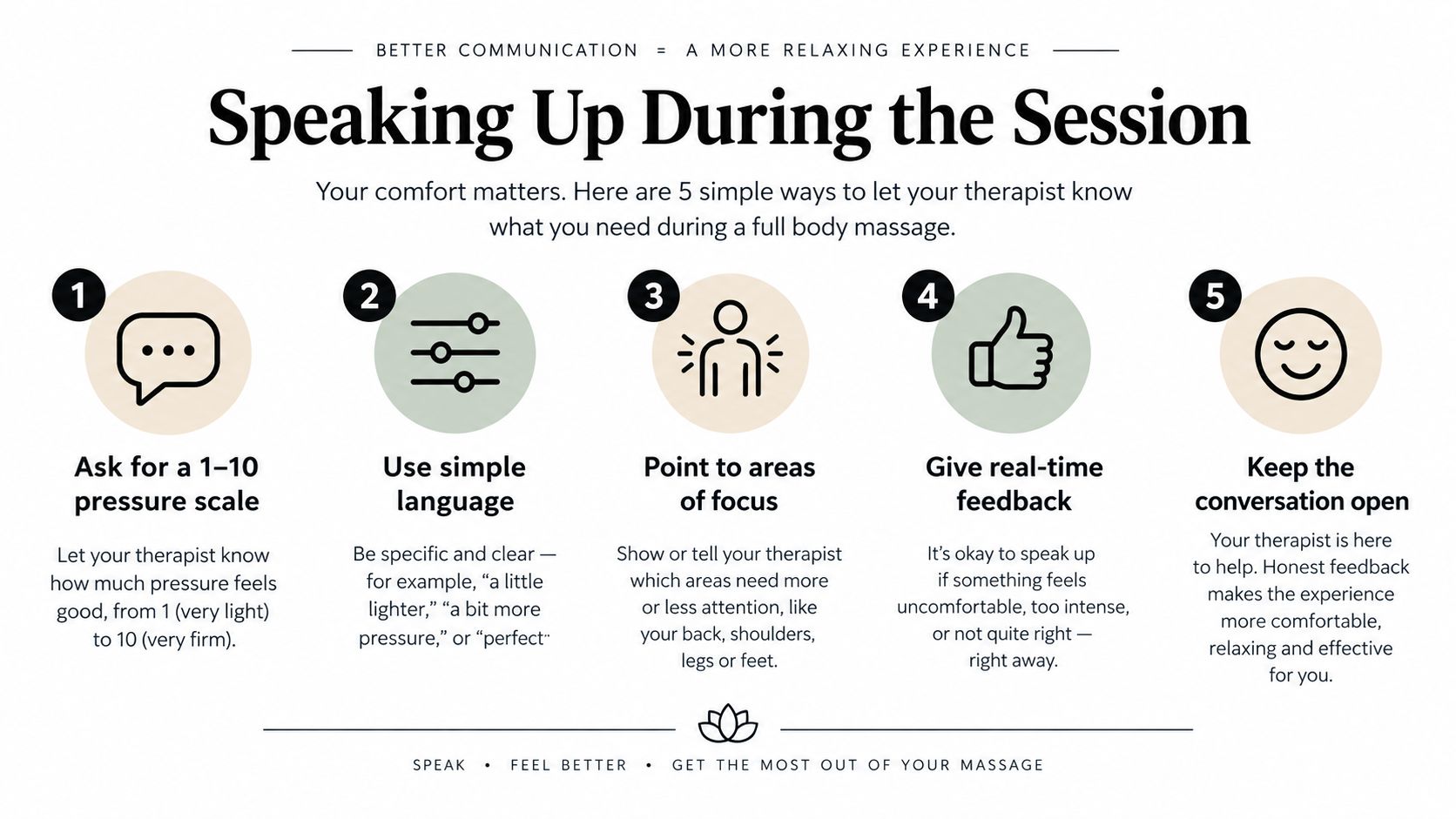
Conversation is optional. You can answer warmly at the beginning, then settle into silence with a small phrase such as, “I'm going to relax now.” The same applies to music. If a gamelan loop or ambient track becomes distracting, ask for a lower volume or a change. The treatment belongs to you, and clear feedback helps the therapist keep it within your comfort zone.
Tipping and Settling the Bill
Settle the bill first, then decide on the tip. Ask for an itemised receipt and check the massage price, any aromatherapy upgrade, foot soak or product purchase before paying the total. If a café drink or matcha is added separately, confirm that it appears correctly rather than trying to untangle several charges at the reception desk.
Currency can be a small source of confusion for travellers. Check whether the amount is shown in Indonesian rupiah and review the conversion displayed by your card terminal before signing. If you're unsure, ask the receptionist to explain the total in rupiah.
The customary gratuity
MassageTherapy.com describes 15–20 percent as the standard tipping norm for massage and bodywork services in major markets, while spa guidance cited by AEDIT's massage etiquette advice places spa massage gratuity around 18–20 percent. Treat these as a guideline, not a compulsory charge. The right choice depends on the quality of service, the spa's policy and your own comfort.
Where tipping is customary, give it directly to the therapist if possible, or ask reception how the team handles gratuities. Some spas use a shared pool, while others pass a cash tip to the individual practitioner. Small rupiah notes are discreet and practical, but don't feel embarrassed if you need to ask where to find change.
A sincere terima kasih matters. Offer it with the tip, or on its own when that's your preference. You're acknowledging attentive service, not buying permission to extend the treatment or request anything outside professional boundaries.
Aftercare and Carrying the Calm Forward
Your treatment continues through the way you leave the room. After deep tissue work, it is easy to sit up quickly, reach for your phone and step into Kuta Lombok's midday heat. Roll onto your side, rise gradually, accept water if offered and pause for a moment before standing. That short reset helps you notice how your body feels before you choose what comes next.
Keep the day spacious where possible. Water, a light meal and no alcohol around the treatment are simple rules. Aftercare does not need to become a strict ritual. Avoid moving straight from the table into demanding plans, especially if your body feels heavy, loose or unusually relaxed.
Let the island day stay gentle
A calm café stop for coffee or ceremonial-grade matcha, a slow walk near Kuta Beach or an easy return to your accommodation can suit the hours after bodywork. Leave intense exercise, a crowded itinerary or an immediate surf lesson for later if you feel unsteady. The beach, Mandalika and Tanjung Aan will still be there once you have reoriented.
Firm bodywork can leave mild tenderness. Gentle movement may feel better than aggressive stretching, and any activity that increases discomfort is a reason to stop. If something feels concerning or continues, speak with a qualified healthcare professional rather than treating spa guidance as medical advice.
Before leaving, remember what worked for you. You may have preferred moderate pressure, quiet music, extra warmth or no work around the inner thighs. Recording those preferences makes the next booking easier, whether you return for deep tissue, choose a Balinese massage after time outdoors or pair bodywork with a facial, manicure, pedicure or nail care at GLAZE - House of Wellness.
Book your treatment at GLAZE before your Kuta Lombok plans fill with beach time and excursions. Choose a Balinese massage, deep tissue, aromatherapy, reflexology or a relaxation and wellness treatment, then leave room before and after so the experience can unfold without hurry.
GLAZE - House of Wellness offers Balinese massage, deep tissue, aromatherapy, reflexology, facials, manicure, pedicure and nail care, plus an on-site specialty coffee and matcha bar. For a calm, well-prepared visit in Central Lombok, reserve your treatment at GLAZE - House of Wellness and arrive ready to let the island day soften.
- full body massage etiquette
- spa etiquette Lombok
- massage tipping guide
- Kuta Lombok spa
- massage aftercare