Pearl Finish Nail Polish: What It Is and How to Wear It
Learn what pearl finish nail polish is, how it differs from chrome and gloss, and how to get the look in Kuta Lombok with lasting results.
Meta title: Pearl Finish Nail Polish in Kuta Lombok
Meta description: Pearl finish nail polish in Kuta Lombok explained. Learn the sheen, wear, styling and salon choices for a luminous manicure in Lombok light.
You've probably done this already. You've had your coffee, stepped near a window after a swim or a slow morning in Kuta Lombok, and lifted your hand to the light to check your nails properly. Some polishes look flat in that moment. Pearl finish nail polish doesn't. It shifts.
That shifting quality is why this finish keeps people curious. It doesn't behave like a plain cream polish, and it doesn't flash like chrome either. In the bright air around Kuta Beach, Mandalika, Tanjung Aan, or Selong Belanak, the same manicure can look milky, rosy, silvery, or softly glazed depending on the hour, the sky, and the angle of your hand.
If you want nails that feel polished without looking severe, pearl is one of the most useful finishes to understand. It's also a finish that makes more sense once you stop thinking about it as a colour and start seeing it as an optical effect.
Table of Contents
- What Pearl Finish Nail Polish Looks Like on the Hand
- The Optics Behind the Sheen
- Pearl Finish Compared to Chrome, Matte and Gloss
- Application Steps and Topcoat Choices
- Wear, Chip Resistance and How Long It Lasts
- Styling Pearl Finish for a Modern Look
- Care, Touch-Ups and the GLAZE Glazed Manicure
What Pearl Finish Nail Polish Looks Like on the Hand
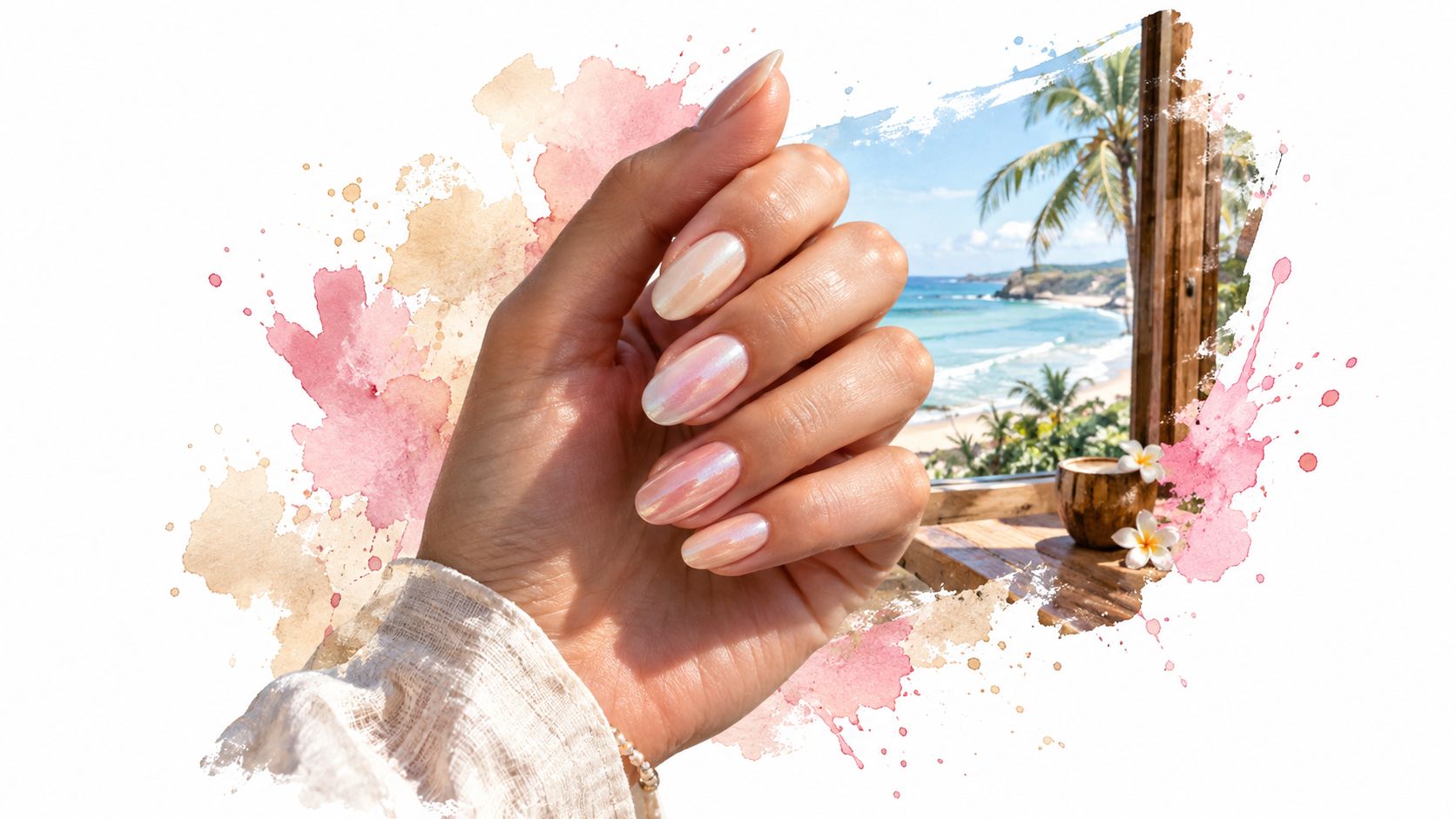
Stand near a sunlit window in Kuta Lombok with freshly painted nails and turn your hand slowly. First you see cream. Then a trace of pale pink. Then a whisper of oyster or soft silver. The surface never quite stays still.
That's the signature of pearl. It doesn't read like one solid block of colour. It reads like light sitting under the top layer of the nail, almost as if the shine is moving behind glass rather than resting on top of it.
What your eye notices first
Most people think they're choosing a shade. In reality, with pearl, they're choosing a behaviour.
A standard gloss polish usually gives you one even hue plus a surface reflection. Pearl is different. It offers:
- A soft drift of light that moves as fingers tilt
- Layered tone rather than a single flat colour
- Satin reflectivity instead of a hard mirror flash
- Depth that can look almost creamy from one angle and gently iridescent from another
That's why pearl often feels more flattering on the hand than it looks in the bottle. The bottle shows pigment. The hand shows movement.
Pearl is recognised first by what it does in light, not by the colour name on the label.
Why it feels softer than sparkle
Readers often confuse pearl with shimmer or glitter. The difference is visual texture. Glitter looks like separate points of sparkle. Pearl looks continuous, almost like a veil pulled smoothly over the nail.
Historically, that idea goes back a long way. Pearl-finish polish has documented roots in the 1920s, when early effect polishes used suspended particles and even fish essence from fish scales, marking one of the first major shifts from simple coloured lacquer to finishes designed to change how light behaves on the nail, as described by Cosmetics & Skin's history of nail polish.
Why it suits travel days so well
On holiday, your hands are always in view. Holding sunglasses, a room key, a fresh coconut, a phone camera. Pearl works in all of those moments because it isn't demanding. It has presence, but it stays quiet.
That balance is why it suits the rhythm of Lombok so well. Morning beach light softens it. Late-afternoon warmth makes it glow. Evening lamps bring out the silkier side of the finish.
The Optics Behind the Sheen
A pearl finish can look almost plain under one lamp, then suddenly turn silky and lit-from-within when you step into sun. That shift is the whole point. Pearl polish works as an optical effect first, and a colour second.
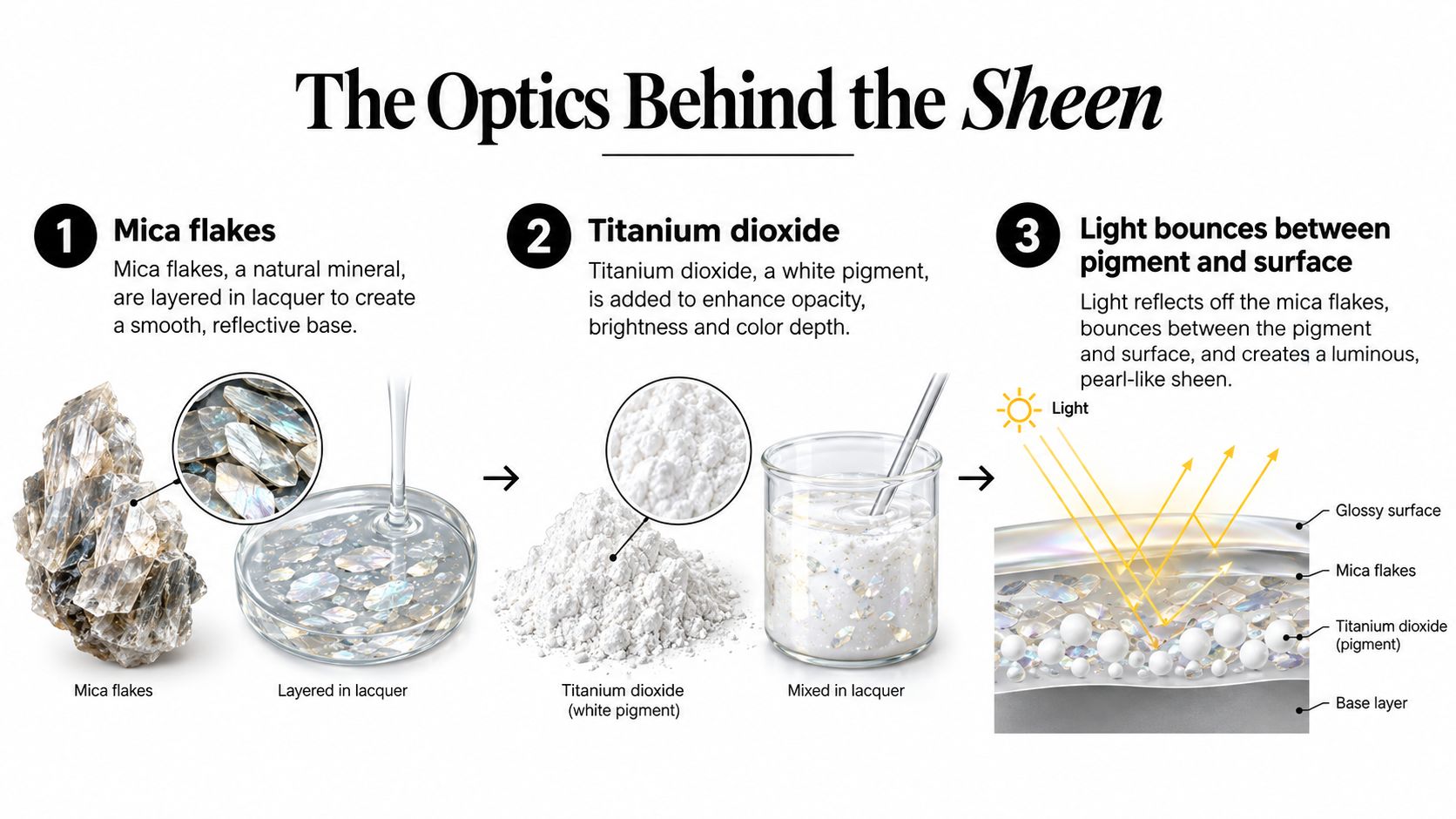
The surface effect comes from pigment materials that handle light in layers rather than showing one flat block of colour. Modern pearl-effect polishes commonly use mica with titanium dioxide, as outlined in this review of nail polish materials and formulation.
What the pigment is doing on the nail
Mica works like stacks of very thin, translucent sheets suspended in the polish film. As the polish settles, those sheets tend to lie fairly flat across the nail. Light passes through the glossy surface, hits those layers, and reflects back in a softer, more scattered way than a simple crème polish would.
Titanium dioxide helps create the bright, pearly return of light. Instead of giving you one clean reflection, it creates a gentle shift. From straight on, the colour may read creamy or milky. Tilt your hand, and the same nail can look cooler, brighter, or slightly iridescent.
That is why pearl often seems to move.
Why the same shade changes with angle
It helps to read pearl polish in three simple steps:
- Light enters through the smooth top surface.
- It meets layered pigment particles inside the polish film.
- Light returns at different angles, so the nail appears to change as the hand moves.
You are seeing light travel, bounce, and spread through the film. The polish colour matters, but the arrangement of those particles matters just as much.
A quick test works well in real life. Hold your hand still, then slowly turn it near a window. If the finish seems to wake up as the angle changes, the pearl effect is working properly.
Why some pearls look silky and others look more sparkly
Salons often carry several polishes all labelled “pearl,” yet they do not read the same on the nail. Particle size is one reason. WF Academy's technical overview of nail polish chemistry notes that finer particles tend to create a softer satin sheen, while larger ones push the finish closer to visible shimmer.
That difference explains a common point of confusion. A soft pearl looks like light passing through silk. A stronger pearl can look closer to frost or fine shimmer, especially outdoors. Same finish family, different visual texture.
Why Lombok light changes the effect
Pearl finish is especially sensitive to its surroundings. Bright daylight, warm late-afternoon sun, indoor amber lamps, and humid air all change how the sheen reads on the hand. In Lombok, that matters more than it might in a cooler, flatter light setting.
Morning light can make a pale pearl look clean and airy. Midday sun can pull out brighter flashes. In the evening, warmer light often makes the same polish look creamier and calmer. Humidity also adds a practical salon note. Application needs to stay even, because uneven settling can interrupt that smooth veil of reflection.
So pearl is not just a shade choice. It is a light-responsive finish that behaves differently across the day, which is exactly why it feels so alive on holiday.
If you'd like a polished version of that effect for a trip, dinner, or beach-week manicure, Book your treatment at GLAZE.
Pearl Finish Compared to Chrome, Matte and Gloss
You notice this comparison fastest in a salon chair. A chrome sample flashes almost like metal under the lamp. A glossy cream gives one clear shine line. Matte stays quiet and powder-soft. Pearl changes as you turn your hand, which is why it helps to read it as an optical effect before you read it as a colour.
That difference matters even more in Lombok, where bright sun, warm interiors, and humid air keep changing the light around your hands. The same pale pearl can look airy at lunch, creamy at sunset, and slightly luminous at dinner. Chrome, matte, and gloss usually stay more predictable.
Four finishes, four different light behaviours
Chrome reflects in a hard, sharp way. The surface acts almost like a small mirror, so every movement creates a strong flash.
Gloss is simpler. You mainly see the colour first, then a clean highlight sitting on top of it.
Matte does the reverse. It softens or swallows reflection, which makes colour look flatter, moodier, and more velvety.
Pearl sits in the middle, but not as a compromise. It scatters light in a soft veil, so the nail looks lit from within rather than coated with a single bright shine.
| Finish | How light reads on the nail | Best fit | Upkeep |
|---|---|---|---|
| Pearl | Soft, shifting sheen that seems to float over the colour | Travel, weddings, dinners, everyday polish that still feels special | Hides minor wear well |
| Chrome | Sharp, mirror-like flash | Statement sets, evening looks, high-contrast styling | Shows edge wear, smudges, and surface marks easily |
| Matte | Little to no reflection, velvety surface | Minimal looks, fashion-forward shapes, deeper tones | Can show oils and lose its dry look over time |
| Gloss | Clear top shine over a smooth colour | Classic manicures, simple colour-first looks | Chips and dents can stand out more clearly |
Where pearl actually sits on the spectrum
A useful comparison is fabric versus metal. Chrome reads like polished jewellery. Pearl reads more like satin or silk catching sunlight through a window. Both reflect light, but they create a very different mood on the hand.
That is why pearl often suits people who want interest without a loud finish. It has movement, but not the high-drama glare of chrome. It feels softer than gloss and less stylised than matte.
On holiday, that balance is practical. A pearl manicure can make sense with beachwear, linen, gold jewellery, or an evening dress because the finish adapts to the setting instead of dominating it.
Which finish is easiest to live with
Real-life wear changes the decision.
- Chrome tends to reveal fingerprints, tip wear, and tiny surface disturbances quickly.
- Gloss stays classic, but a chip can look obvious because the surface reads as one clear block of colour and shine.
- Matte can pick up oils from sunscreen, hand cream, or cuticle balm, which changes its texture.
- Pearl often disguises small imperfections because the shifting sheen breaks up what your eye notices first.
A finish with visual movement is often more forgiving than one with a perfectly uniform surface.
That forgiving quality is part of the salon appeal in Lombok. Between heat, humidity, scooter handles, beach bags, and frequent hand washing, nails rarely stay untouched for long. Pearl still looks polished when life has happened to it, and that makes it easier to wear well.
Application Steps and Topcoat Choices
Pearl polish rewards careful application because the finish is really a light effect sitting on colour. If the nail surface is uneven, light catches in broken lines instead of a soft glow. On the hand, that difference shows up fast, especially in Lombok, where bright sun, indoor shade, and humid air keep changing what the eye notices.
Start with a surface that lets light travel cleanly
Pearl particles need a relatively even base so they can settle in the same direction. A heavily ridged nail can make the sheen look patchy, the way satin looks creased when the fabric twists.
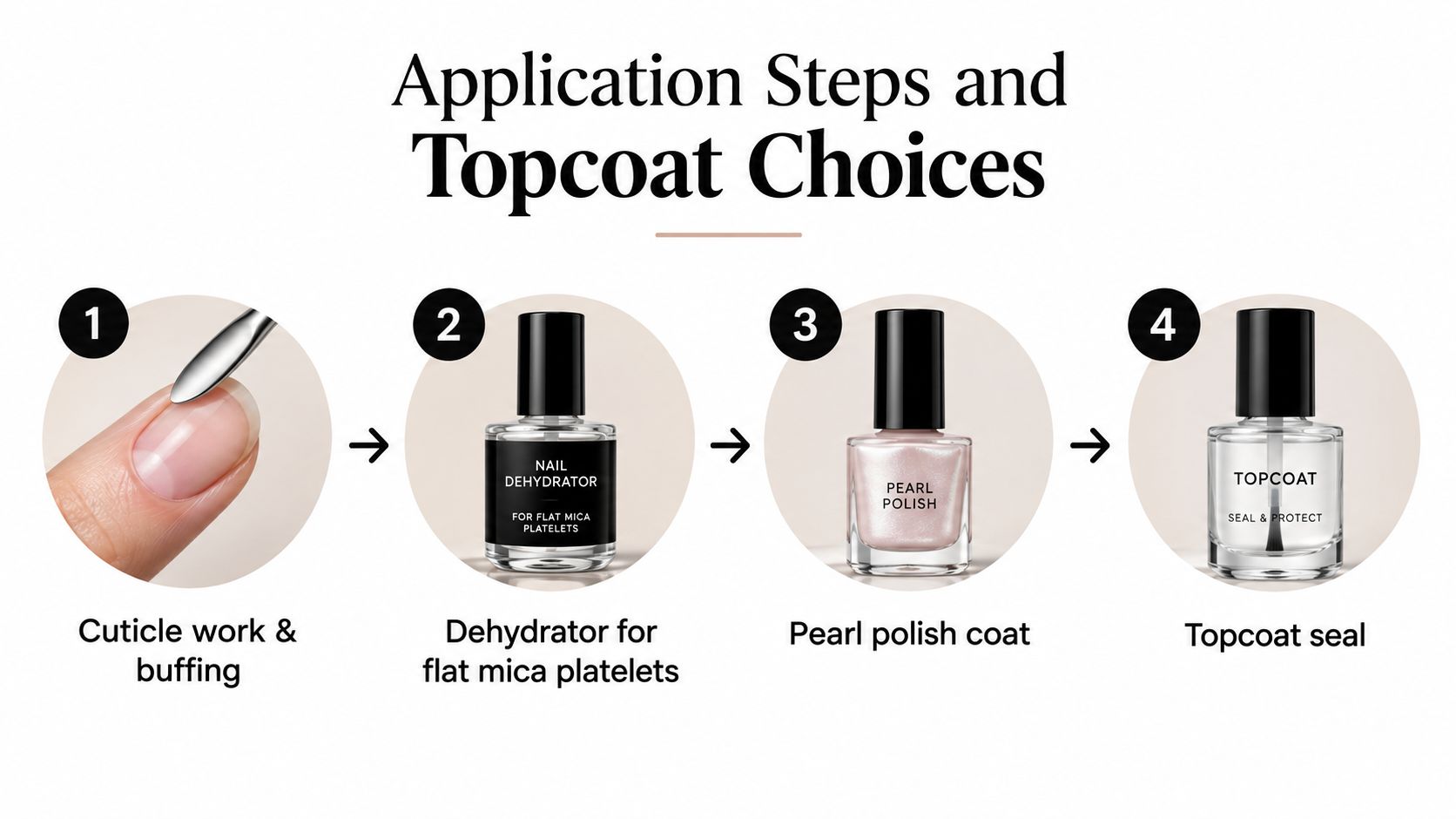
Prep does not need to be aggressive. It needs to be precise.
- Cuticle work: keeps the edge neat, so the reflective finish looks intentional rather than crowded at the border
- Light buffing: softens visible ridges that can bend the sheen in different directions
- Dehydrator: removes surface oil so the polish grips more evenly
- Ridge-filling base coat: creates a smoother path for the pearl effect to move across
That base coat matters more with pearl than many people expect. With a cream polish, a small ridge may disappear into solid colour. With pearl, the same ridge can interrupt the illusion.
Apply in thin, quiet layers
Two thin coats usually give a cleaner result than one heavy one. Thick coats can push the pearly particles around too much, which makes brush marks easier to see and can cloud the glow.
Use the brush with a light hand. Let it skim the nail rather than press into it. That helps the particles settle flatter, like smoothing silk instead of dragging a comb through wet paint.
Seal the free edge as you go. In warm, humid conditions and frequent hand use, that small step helps the finish stay neater.
Choose the formula by how you plan to wear it
Regular lacquer and gel do not just differ in wear time. They also shape the visual effect a little differently.
- Regular lacquer works well for travellers who want easier removal or a quick colour change.
- Gel pearl gives a smoother, more sealed surface, which often makes the light effect look more continuous.
- Pearl topcoats over a base shade suit anyone who wants the optical shift without committing to a full pearly colour.
A product overview from Typology's explanation of nail polish components notes that nail polish typically relies on nitrocellulose as the main film-forming polymer, while micas create the pearlescent or metallic effect. In everyday terms, one part forms the clear coloured film, and the other part catches and scatters light.
A commercial pearlescent formula can also include materials such as synthetic fluorophlogopite, tin oxide, silica, mica, and calcium sodium borosilicate, alongside standard solvents and film-formers, as shown in this pearlescent nail polish ingredient example.
Topcoat decides how the pearl reads
Topcoat is not only protection. It acts like the final lens over the illusion.
- High-gloss topcoat: makes pearl look wetter and clearer, almost like light seen through a thin layer of water
- Matte topcoat: diffuses the reflection and gives the finish a softer porcelain effect
- Gel topcoat: adds a thicker, glass-like surface that can make the pearl look smoother and more unified
This choice is especially noticeable in salon lighting versus daylight. Under indoor lamps, a glossy topcoat can make the sheen look sharper and more liquid. Outside, tropical daylight often pulls out the softer side of pearl, especially in pale shades.
This video shows the rhythm of a reflective finish application in motion:
Let the surface settle fully before applying cuticle oil. If oil touches the finish too early, the final surface can lose a bit of its crispness, and pearl looks best when that top layer stays clear and even.
Wear, Chip Resistance and How Long It Lasts
You notice wear on pearl polish a little later than you do on flat cream or mirror chrome. The reason is optical. Pearl keeps bouncing soft light across the nail, so tiny scuffs do not announce themselves straight away. On the hand, that can make the manicure look fresher than it really is for a few extra days.
Daily life still decides the outcome. In Lombok, that can mean scooter grips, beach bags, swimsuit fastenings, sunscreen, salt water, and repeated hand-washing in warm air.
Gel and lacquer age differently
Gel pearl usually holds its smooth, glassy surface longer because the shimmer sits inside a cured coating. Lacquer pearl has a lighter, more flexible feel, but the surface can lose sharpness sooner from rubbing and repeated contact.
What changes is not only how long it lasts. It is how the illusion changes as the manicure wears. Pearl is an optical finish first. If the top surface stays even, the glow stays clear. Once that surface picks up fine scratches, the sheen starts to look cloudy, like a pearl seen through a fingerprinted lens.
| Factor | Gel Pearl Manicure | Lacquer Pearl Manicure |
|---|---|---|
| Surface look | Smoother, more sealed reflection | Softer, slightly more delicate sheen |
| Chipping | Usually resists daily knocks better | Chips sooner with frequent hand use |
| Grow-out | Cuticle gap becomes obvious faster | Easier to refresh or fully redo |
| Removal | Takes more time and care | Simpler for travel and quick changes |
| Holiday practicality | Better for longer uninterrupted wear | Better for flexibility |
What heat, humidity, and beach residue actually do
Humidity alone does not ruin a pearl finish. It mainly changes timing during application and can make nails feel softer after long exposure to water. The bigger problem is residue on top of the polish.
Salt, sunscreen, and very fine sand can sit on the surface like a thin film on sunglasses. The colour underneath is still there, but the light return looks duller and less clean. That is why pearl can seem to lose depth after a beach afternoon even if it has not chipped much.
A quick rinse, gentle drying, and a little care with the nail edge help more than many people expect.
Pearl hides minor wear well because the reflection is soft, but it stays luminous only if the surface stays clean and reasonably smooth.
How long it usually looks good
A gel pearl manicure often gives the longest stretch of consistent shine, especially in hot, active holiday conditions. A regular lacquer version asks for more attention, but it is easier to patch if one tip chips or one nail gets scraped.
This matters for travellers. If you want two calm, polished weeks with minimal thought, gel usually makes more sense. If you like changing colour mid-trip or removing polish without salon tools, lacquer is often the easier choice.
Why pearl often survives bright light better than chrome
Pearl also has a small advantage once the manicure is no longer perfect. Chrome depends on a very smooth, mirror-like surface, so every scratch interrupts the effect quickly. Pearl works with softer diffusion, so minor wear does not break the illusion as harshly.
In strong Lombok daylight, that softer reflection can be especially flattering. The warmth and brightness pull light across the nail instead of bouncing it back in one hard flash, so the finish keeps some shape and glow even after a busy day.
Simple maintenance that keeps the sheen alive
If the surface starts to look tired before it chips, a fresh layer of topcoat can restore clarity. That does more than add shine. It rebuilds the outer lens that helps the pearl read clearly on the hand.
Cuticle oil also helps the manicure look better overall, but keep it around the nail rather than flooding the plate if the polish is still fresh. Clean edges and a smooth top surface let the optical effect do its job.
Styling Pearl Finish for a Modern Look
You step out of a cool salon into Lombok sun, glance at your hands, and the colour you chose is only half the story. Pearl reads first as light on the nail. The shade sits underneath, but the effect is the soft glow that slides as your hand moves.
That is why pearl can look modern, fresh, or dated depending less on the bottle colour and more on how the finish interacts with skin tone, clothing texture, jewellery, and daylight. Current beauty coverage reflects that shift, describing pearl through milky layers, glazed surfaces, and chrome-pearl hybrids rather than saving it for formal occasions, as noted in ELLE's feature on pearl nails and refined maximalism.
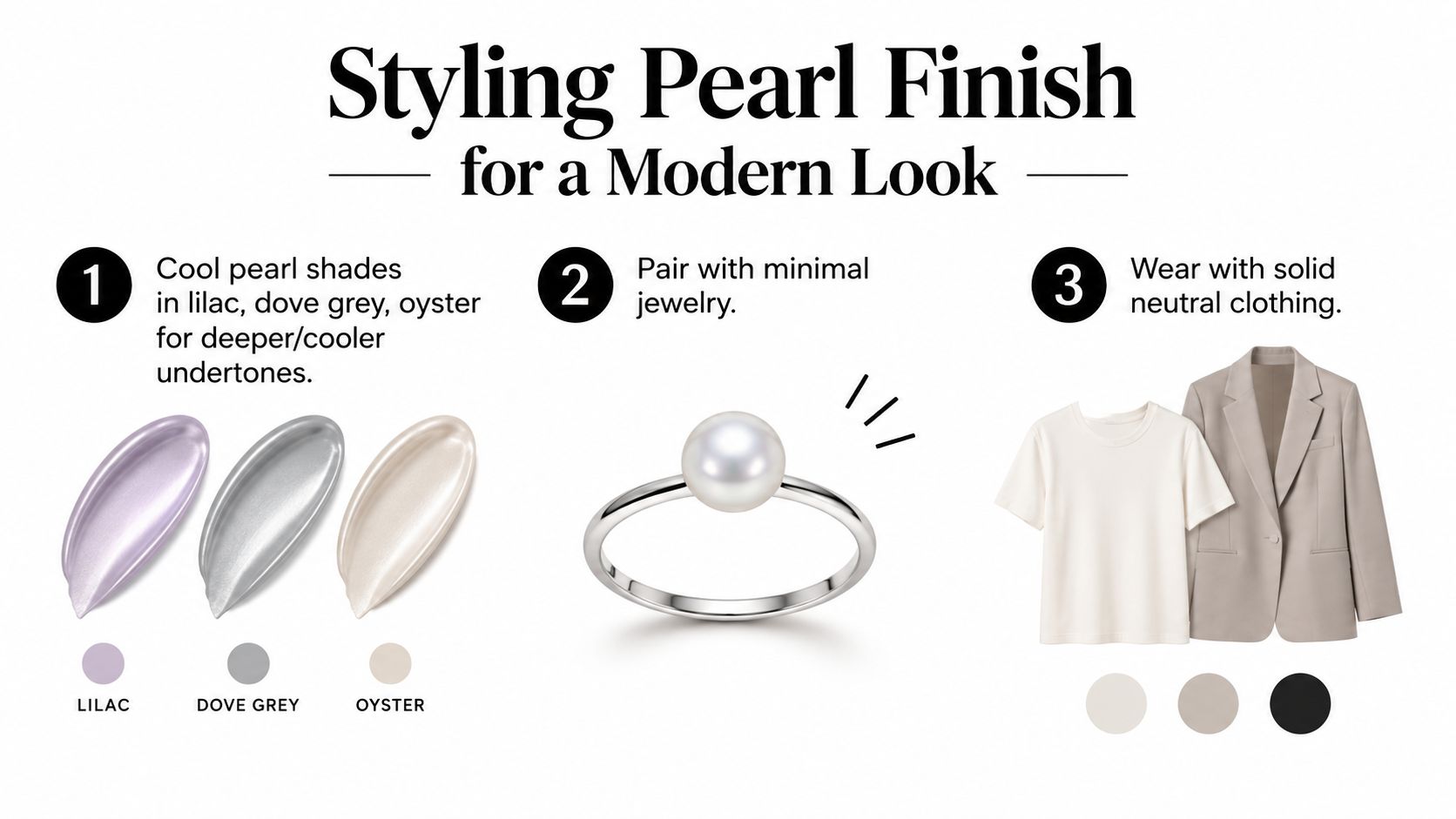
Match the undertone before the outfit
Start with the question, what kind of light do you want on the hand? Cool pearls reflect like moonlight on water. Warm pearls glow more like late afternoon sun on satin. That small shift changes everything.
- Cool-leaning pearls such as lilac, oyster, or dove grey often look crisp with silver jewellery and can flatter cooler or deeper complexions.
- Warm-leaning pearls such as champagne, blush, or rose gold usually sit more easily beside gold jewellery and warmer undertones.
- Milky white pearl behaves like a neutral fabric. It brightens the hand without pushing strongly warm or cool.
If pearl has ever looked stiff or old-fashioned on you, the problem is often the undertone match, not the finish itself.
Dress for texture, not sparkle
Pearl already creates movement, so the cleanest styling choice is usually texture elsewhere rather than more shine. Linen, cotton poplin, washed silk, ribbed knits, and matte leather give the eye a calm place to rest. The manicure then feels integrated, almost like the final brush of light across the outfit.
Jewellery works the same way. One smooth ring or a slim bracelet often supports pearl better than a stack of highly reflective pieces, because too many competing flashes can make the nail effect disappear.
A few combinations read especially well in Lombok:
- Champagne pearl with cream linen for warm evening light
- Smoky lilac pearl with black, stone, or charcoal for a sharper city-hotel mood
- Soft white pearl with swim cover-ups and sand-toned separates for daytime
- Oyster pearl with silver hardware or a cool watch face for a cleaner, more architectural look
Why pearl feels current now
The older version of pearl polish often looked flat because it tried to deliver all the effect in one obvious frosty layer. The modern version uses translucency. Light passes through, bounces softly, and returns with more depth. On the hand, that reads less like shimmer painted on top and more like glow held inside the nail.
That optical softness matters even more in Lombok. Humid air, strong sun, and warm skin can make harsh finishes feel louder than expected. Pearl usually adapts better. Morning light may make it look fresh and milky. Golden-hour light can pull out champagne, pink, or lavender tones you barely noticed indoors.
For a modern result, choose pearl the way you would choose a fabric. Ask whether you want a polished glaze, a quiet lustre, or a cooler shell-like sheen. Once that is clear, the colour choice becomes much easier.
Care, Touch-Ups and the GLAZE Glazed Manicure
By day three in Lombok, a pearl manicure can start telling you exactly what it has been through. Beach salt leaves a faint film. Sunscreen can soften the shine at the edges. Repeated washing can make the surface look less glassy. Because pearl works like a light effect more than a flat colour, even a small veil over the top changes what your eye sees.
That is why care matters here. You are not only protecting polish. You are keeping the nail surface clear enough for light to bounce back in that soft, shell-like way instead of scattering and turning hazy.
A simple rhythm for tropical weather
Warm air and humidity do not usually ruin pearl in one dramatic moment. They change it slowly, layer by layer, the way a window loses clarity when fingerprints, sea mist, and dust build up over time.
A practical routine helps keep that optical clarity:
- Morning cuticle oil: keeps the skin frame around the nail tidy, so the finish looks fresher
- Evening cuticle oil: helps the nail area stay flexible after sun, swimming, and hand-washing
- Gentle edge cleansing: useful after sunscreen, pool time, or the beach, where residue collects first
- Fresh topcoat when shine drops: adds back a smooth surface so the pearl reads cleanly again
Use a light hand. Pearl shows texture quickly, so rough filing, aggressive scraping, or picking at one corner usually makes the finish look more uneven than the original chip.
When to touch up and when to redo
A small edge chip can often be patched if the rest of the nail still looks even and glossy. If several nails have gone cloudy, if grow-out is drawing the eye, or if one repaired spot catches light differently from the others, a full redo usually gives a better result.
Pearl is less forgiving than plain cream polish in this one way. A cream colour can hide a small repair because the eye reads colour first. Pearl makes the eye read reflection first. If one section reflects light differently, the break in the illusion becomes easier to spot.
Where salon technique helps most
Salon work helps most when you want the finish to stay uniform across all ten nails. The prep stage matters because tiny ridges, leftover cuticle, or uneven sealing can interrupt the way pearl reflects light. In Lombok, where bright sun and moist air reveal every surface detail, that extra control often shows up more clearly than people expect.
At GLAZE, House of Wellness, Jl. Raya Kuta No. 20, Kuta, Central Lombok, NTB 83573, the glazed manicure can include careful nail prep, a strengthening base or builder gel, controlled pearl layers, a glossy seal, and finishing hand care. That setup suits travellers who want the glazed effect to read cleanly through dinners, beach days, and photos around Central Lombok.
For a short holiday refresh, a lighter lacquer service may be enough. For a longer stay in Kuta Lombok, or for anyone who wants that glazed, light-catching finish to stay more consistent, a more structured pearl manicure usually makes daily wear easier.
Pearl asks for clarity, not fuss. Keep the surface smooth, keep residue off, and the shine has room to do its work.
If you want a luminous manicure that still feels easy in island weather, GLAZE - House of Wellness offers manicure, pedicure and nail care alongside facials, Balinese massage, deep tissue, aromatherapy, reflexology, and an on-site specialty coffee and matcha bar. Book a nail appointment before your beach days or evening plans in Kuta Lombok, and let the finish do what pearl does best in Lombok light.
- pearl finish nail polish
- pearl nails
- nail polish finishes
- glazed manicure
- Kuta Lombok spa