What Is Aromatherapy Massage in Kuta Lombok
What Is Aromatherapy Massage. Discover what aromatherapy massage is, how essential oils meet skilled touch, and why travellers in Kuta Lombok are choosing slow
You've spent the morning moving between Kuta Beach and the cafés of Kuta Lombok, with warm air on your skin, salt in your hair and a little more tension in your shoulders than you expected. An aromatherapy massage offers a gentle change of pace. It combines flowing bodywork with carefully diluted essential oils, creating a quiet, sensory pause between a beach afternoon and your next Lombok plan.
Table of Contents
- A Slow Introduction to Aromatherapy Massage
- How Essential Oils and Touch Work Together
- Common Essential Oils Used in Massage
- What an Aromatherapy Massage Session Feels Like
- Realistic Benefits and What the Evidence Says
- Safety, Sensitivities, and When to Skip a Session
- Booking an Aromatherapy Massage in Kuta Lombok
A Slow Introduction to Aromatherapy Massage
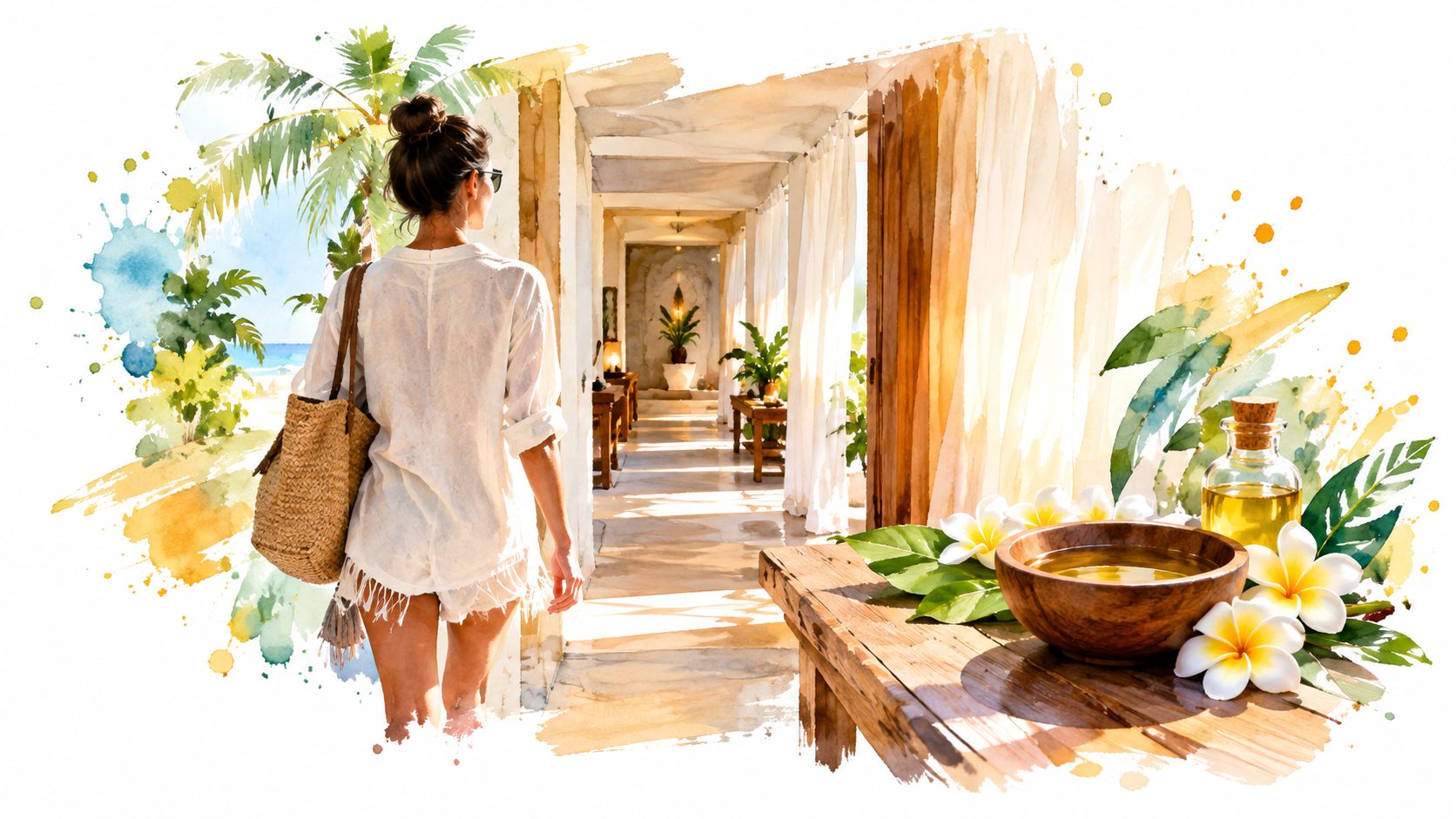
You step out of the Kuta Lombok heat and into a quieter hallway. The air carries a soft botanical note, the light is low, and the sounds of the road begin to fade. In the treatment room, your therapist asks which scents you enjoy, then blends a small amount of essential oil into a carrier oil before beginning with slow strokes across the body.
That's the simplest answer to what is aromatherapy massage. It's a massage that uses diluted, plant-derived essential oils alongside touch. A plain relaxation massage may use an unscented oil or cream for glide, while aromatherapy massage adds an intentional aromatic element. You feel the movement of the therapist's hands, and you also notice how the chosen scent shapes the atmosphere around you.
The carrier oil matters. It makes the essential oil suitable for topical use and allows the therapist to work smoothly across the skin. Depending on the consultation, the blend may feel light and almost invisible, or richer and more comforting. The purpose isn't to overwhelm you with fragrance. A well-prepared treatment leaves room for your breathing, your preferences and the natural rhythm of the massage.
An old practice with a modern island rhythm
Aromatic plant oils have a long history. Accounts connect their use in baths, ointments and massage preparations with ancient Egyptian, Greek, Roman, Indian and Chinese practices. The modern term aromatherapy first appeared in print in 1937, in René-Maurice Gattefossé's French book Aromathérapie: Les Huiles Essentielles, Hormones Végétales, as described in this history of aromatherapy.
Steam distillation, refined during the Islamic Golden Age, helped make essential-oil production more consistent. Over time, aromatic oils moved from ritual preparations towards more standardised uses in massage and skin care.
In Kuta Lombok, the experience feels less like a history lesson and more like a natural part of a travel day. After swimming at Tanjung Aan, walking around Mandalika or returning from Selong Belanak, an unhurried massage gives you somewhere to put the day down. You're not booking a medical procedure. You're choosing a calm ritual built around touch, scent and time.
A useful distinction: aromatherapy massage is a complementary wellness experience, not a replacement for medical care.
How Essential Oils and Touch Work Together
Aromatherapy massage feels different from a scented room or a few drops added to a bath because the treatment brings together two sensory routes. The first is topical. The second begins with your sense of smell.
The skin pathway
Essential oils are highly concentrated plant extracts, so a therapist dilutes them in a carrier oil or cream before applying them. Common carrier oils in massage practice include sweet almond, coconut and jojoba, although the exact choice depends on the spa's products and your skin preferences.
During the massage, the therapist spreads the blend across the skin using long, even movements. The touch creates a mechanical effect of its own, while the oil provides glide and carries the aroma close to your skin. A 2021 review describes gradual skin absorption over approximately 10 to 40 minutes, with the timing varying according to the oil and the area treated. It also discusses proposed interactions involving the GABAergic, serotonergic, dopamine and sympathetic systems, while noting that inhaled components may engage the olfactory-limbic pathway. You can read the detailed explanation in this review of aromatherapy massage mechanisms.
That doesn't mean the oil is acting like a medicine. It means the treatment involves more than fragrance floating in the room. Your skin, the massage movements and the time the blend remains in contact all contribute to the experience.
The scent pathway
The second route begins when aroma molecules reach your nose. Smell has a close relationship with emotion and memory, which is why one familiar scent can take you instantly to a childhood garden, a hotel lobby or a previous holiday.
In the treatment room, inhalation happens naturally as you breathe. You don't need to take exaggerated breaths or lie directly beside a diffuser. A subtle scent near the table may be enough to make the room feel softer and more settled.
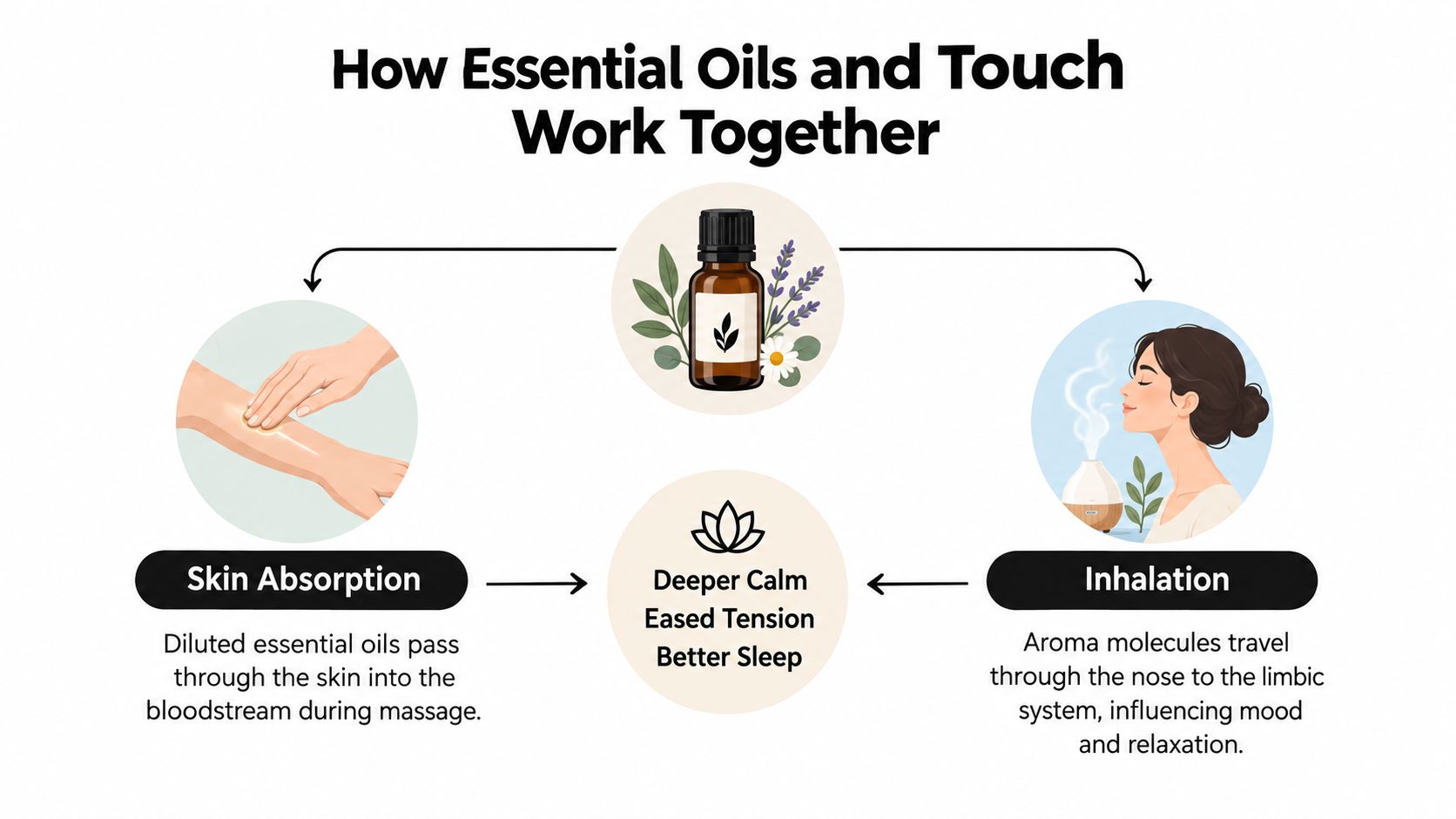
Skilled touch helps connect these routes. Slow, predictable strokes give your attention something steady to follow. As your breathing settles, you may become more aware of the scent, the warmth of the room and the changing sensations in your shoulders, back, legs or feet.
The result isn't identical for everyone. One guest may notice that lavender makes the room feel ready for an evening of rest. Another may prefer a brighter citrus note after a quiet day indoors. The value lies in personal fit, not in forcing one blend to produce one promised result.
Aromatherapy massage has also become a substantial wellness category rather than a niche tradition. A 2025 industry estimate placed the global aromatherapy market at USD 1.68 billion, with a projection of USD 2.93 billion by 2034 and a 6.51% CAGR, as reported in the clinical literature linked through this overview of aromatherapy massage. Those figures describe market growth, not proof that every oil or massage produces a particular outcome.
Common Essential Oils Used in Massage
An oil menu is best approached like a tasting flight. Start with the aromas you already enjoy, then consider how each one might feel in a quiet room with warm oil, low lighting and several minutes of stillness.
Lavender is soft, herbaceous and familiar. Spas often associate it with evening relaxation and a gentle bedtime atmosphere. If you find strong floral scents tiring, ask to smell it before the blend is prepared.
Ylang-ylang has a rich, sweet floral character. It can feel lush and expressive rather than clean or airy, making it a good choice for guests who enjoy tropical floral notes. A little can be enough, particularly in a small treatment room.
Chamomile tends towards a soft, apple-like herbal aroma. It's often selected for a soothing, delicate spa mood. Guests with fragrance sensitivities should still discuss it with the therapist, since a gentle reputation doesn't guarantee personal compatibility.
Bergamot offers a fresh citrus lift with a slightly floral edge. It can make the room feel lighter after a humid day in Central Lombok. Citrus oils require particular care around sun exposure, so ask the therapist about the blend before heading straight back to the beach.
Eucalyptus smells cool, clean and penetrating. Some guests enjoy its crisp quality after travel, while others find it too intense. If you're sensitive to strong aromas or have a respiratory condition, mention that during the consultation.
Peppermint has a distinctly fresh, cooling profile. It may appeal after a day of walking or outdoor activity, but it can feel sharp around the face and temples. A therapist can keep the blend away from the face or choose a gentler alternative.
Sandalwood is warm, dry and gently woody. It suits guests who prefer grounded scents over bright citrus or sweet florals, and it pairs naturally with a slow, meditative atmosphere.
Jasmine and rose bring rounded, floral notes with a more romantic feel. They're often chosen for emotional comfort and a soft, luxurious room ambience, although both can be too rich for guests who prefer minimal fragrance.
| Essential Oil | Scent Profile | Traditional Spa Use | Key Safety Note |
|---|---|---|---|
| Lavender | Soft, herbal and lightly floral | Evening relaxation atmosphere | Discuss sensitivity before topical use |
| Ylang-ylang | Sweet, lush and tropical floral | Mood-softening sensory ritual | Strong fragrance may overwhelm some guests |
| Chamomile | Gentle, herbal and subtly fruity | Delicate, calming spa ambience | Ask about suitability for sensitive skin |
| Bergamot | Bright citrus with floral depth | Fresh, uplifting room scent | Take care around sun exposure |
| Eucalyptus | Cool, clean and penetrating | Crisp, refreshing atmosphere | May be unsuitable for fragrance-sensitive guests |
| Peppermint | Sharp, minty and cooling | Refreshing bodywork experience | Keep away from eyes and discuss respiratory sensitivities |
| Sandalwood | Warm, dry and woody | Grounding, meditative ritual | Confirm personal fragrance preference |
| Jasmine or rose | Rich, rounded and floral | Soft, comforting atmosphere | Floral intensity varies between guests |
The table is a starting point, not a prescription. Essential oils can irritate the skin or provoke an unwanted response, and natural doesn't automatically mean suitable for everyone. Your therapist should let you choose the scent direction, adjust the concentration and leave an oil out when it doesn't feel right.
What an Aromatherapy Massage Session Feels Like
At a considered day spa in Kuta Lombok, the experience begins before the first stroke. You arrive with the beach dust still on your feet, the afternoon brightness in your eyes and perhaps a vague sense that your shoulders have been working harder than you noticed.
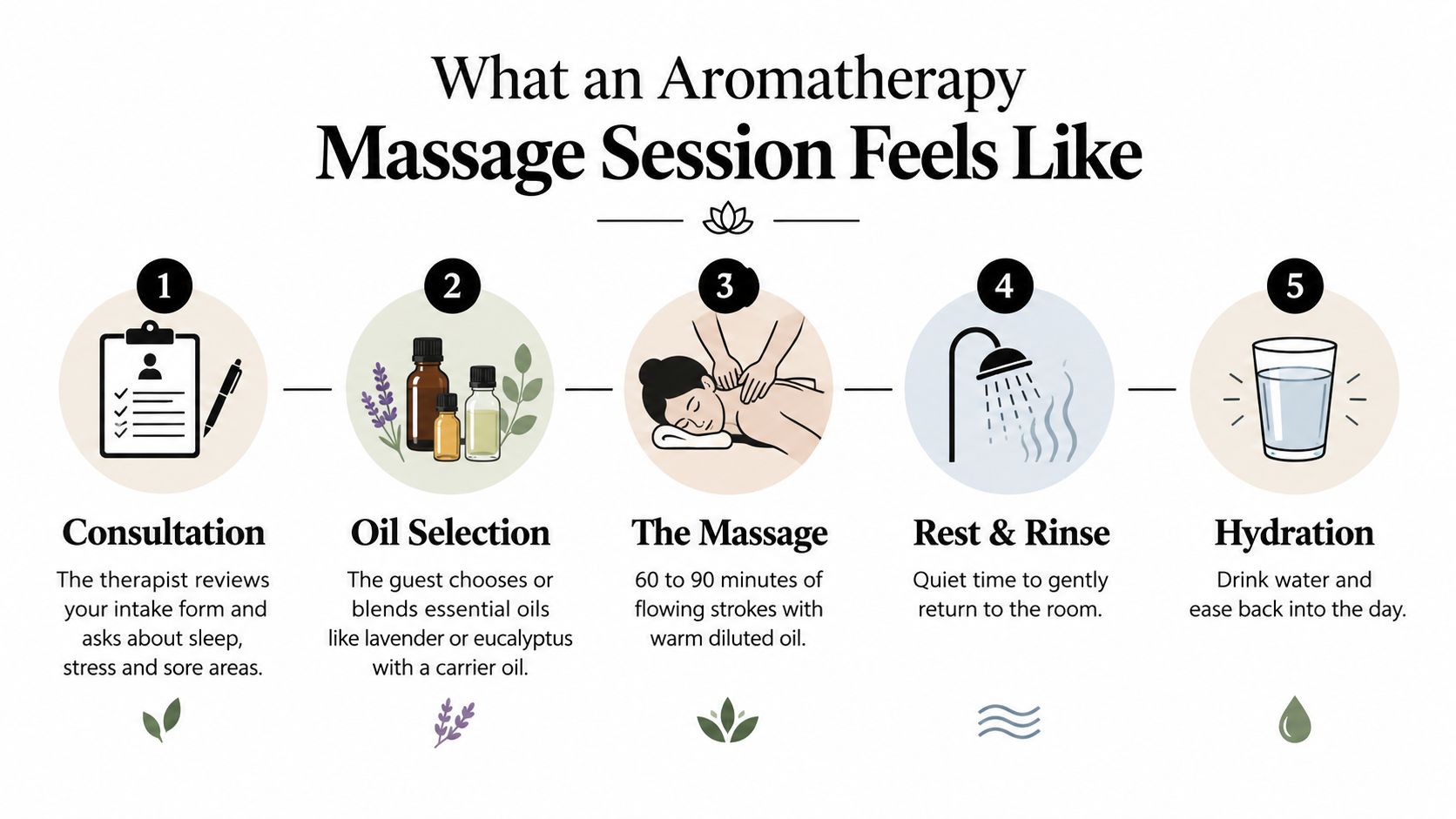
The consultation comes first
Your therapist reviews the intake information and asks simple questions. How have you been sleeping? Do you prefer a barely-there scent or something more noticeable? Are there areas of tension, skin sensitivities or fragrances you'd rather avoid?
You can also explain how you'd like the massage to feel. Some guests want a quiet, flowing session after travelling. Others prefer more attention around the shoulders, back or feet. Aromatherapy massage is adjustable, and a good consultation gives the therapist information without making the visit feel formal.
The oils are selected after this conversation. You may be offered a single aroma or a blend, diluted into a carrier oil or cream. The Federation of Holistic Therapists' aromatherapy massage guidance describes this consultation-led approach, including the use of carrier oil or cream according to individual needs.
The room becomes quieter
You change in privacy and settle onto the massage table under a towel. The room is arranged for comfort, with soft lighting and a temperature that feels pleasant against skin that has just come in from the Lombok heat.
The chosen oil blend may be diffused nearby or kept close to the table, depending on your preference. The therapist begins gradually, allowing you to become familiar with the scent and the pressure before working more broadly across the body.
Long movements travel down the back. The shoulders receive patient attention, then the arms and hands. Later, the therapist may work around the scalp, offer a gentle face massage if you've agreed to it, and finish with the feet. You're covered throughout, with only the area being treated uncovered.
You don't need to perform relaxation. Your only task is to mention if the pressure, temperature, music or scent needs changing.
A mid-session silence is normal. So is a gentle turn-over when the therapist moves from the back of the body to the front. You may notice the room more clearly at that point, then settle again as the hands return to the shoulders, neck or feet.
Here's a short visual guide to the atmosphere and rhythm of an aromatherapy massage session:
The ending is deliberately unhurried
When the massage finishes, the therapist leaves the room so you can rest beneath the towel. There's no need to stand immediately. Let your breathing return to its usual rhythm, sit up slowly and take a moment before getting dressed.
A glass of water or herbal tea can make the transition feel complete. From there, keep the next part of your day light. A quiet walk near Kuta Beach, a slow coffee or an easy return to your accommodation may suit the mood better than rushing into another full itinerary.
Realistic Benefits and What the Evidence Says
Aromatherapy massage can be very enjoyable without needing to promise more than it can deliver. The most realistic expectation is complementary relaxation support, created by the combination of paced touch, pleasant aroma and a protected period away from travel demands.
The evidence remains mixed. Australia's 2024 evidence evaluation found that effects on pain compared with massage alone were very uncertain across 19 studies and 1,058 participants. A 2020 meta-analysis of lavender aroma massage reported a moderate anxiety reduction, with Hedges' g = -0.66 across six randomised trials and 448 participants, suggesting possible short-term stress modulation rather than broad medical efficacy. These findings are summarised in the Australian natural therapies evidence evaluation.
A separate systematic review included only 12 trials, with six focused on relaxation, and concluded that the effect on anxiety was mild and transient. Its systematic review of aromatherapy massage reinforces the need for modest expectations.
| Common Claim | Evidence Strength | Realistic Takeaway |
|---|---|---|
| It creates a calmer short-term mood | Limited and mixed | The ritual may help you feel more settled during or soon after the session |
| It supports sleep | Not established as a broad medical effect | An evening treatment may become a pleasant part of a wind-down routine |
| It reduces perceived anxiety | Some promising findings, but limited certainty | Lavender-based massage may support short-term relaxation for some guests |
| It removes muscle soreness | Massage may influence how the body feels, but oil-specific effects are unclear | Choose the treatment for soothing bodywork, not a guaranteed result |
| It detoxes the body | Not supported as a reliable aromatherapy massage outcome | Treat detox language as marketing rather than a sound expectation |
| It balances hormones or boosts immunity | Not established by the evidence presented here | Don't book the treatment for a promised systemic effect |
The table separates the experience from the claim. You may leave feeling quieter, less mentally crowded or more aware of your body. That response is meaningful, but it's personal and temporary rather than a clinical fix.
Aromatherapy massage also shouldn't be judged by the oil alone. The therapist's pace, the comfort of the room, your ability to communicate and the decision to pause after the session all shape what you feel. For a traveller in Kuta Lombok, that may be the main benefit: a deliberate hour in which the island's heat, traffic and plans stay outside.
Safety, Sensitivities, and When to Skip a Session
Essential oils need care because they're concentrated. Never apply an essential oil directly to the skin without appropriate dilution. Professional massage normally combines the oil with a carrier oil, and the therapist should be able to explain what's being used and adjust the blend if you have concerns.
A patch test can help identify a possible skin reaction before a full treatment. The Cleveland Clinic's aromatherapy guidance notes risks including skin irritation, allergic contact dermatitis and photosensitivity, and recommends dilution in carrier oils to reduce risk.
Share the details that affect your treatment
Tell the spa about sensitive skin, known allergies, fragrance intolerance, asthma, migraines or any scent that has caused discomfort before. Inhaled oils can be unpleasant or aggravating for some people, even when the same aroma feels calming to someone else.
Sun exposure deserves extra attention in Lombok. Some citrus oils, including bergamot, can increase photosensitivity, so ask whether a blend is suitable if you plan to return to the beach or spend time outdoors after your appointment.
Pregnancy also calls for individual guidance. Some oils are commonly avoided during particular stages, so disclose pregnancy when booking rather than relying on a standard menu. Your therapist can offer a pregnancy-appropriate alternative or a scent-free treatment, and you can ask for the face or abdomen to be left out if that feels more comfortable.
Know when to postpone
A massage should be reconsidered if you have a fever, broken skin, an acute skin condition, a recent surgery or another health concern that could make bodywork unsuitable. Medication use can also matter, so mention it during the consultation and seek advice from an appropriate healthcare professional when you're uncertain.
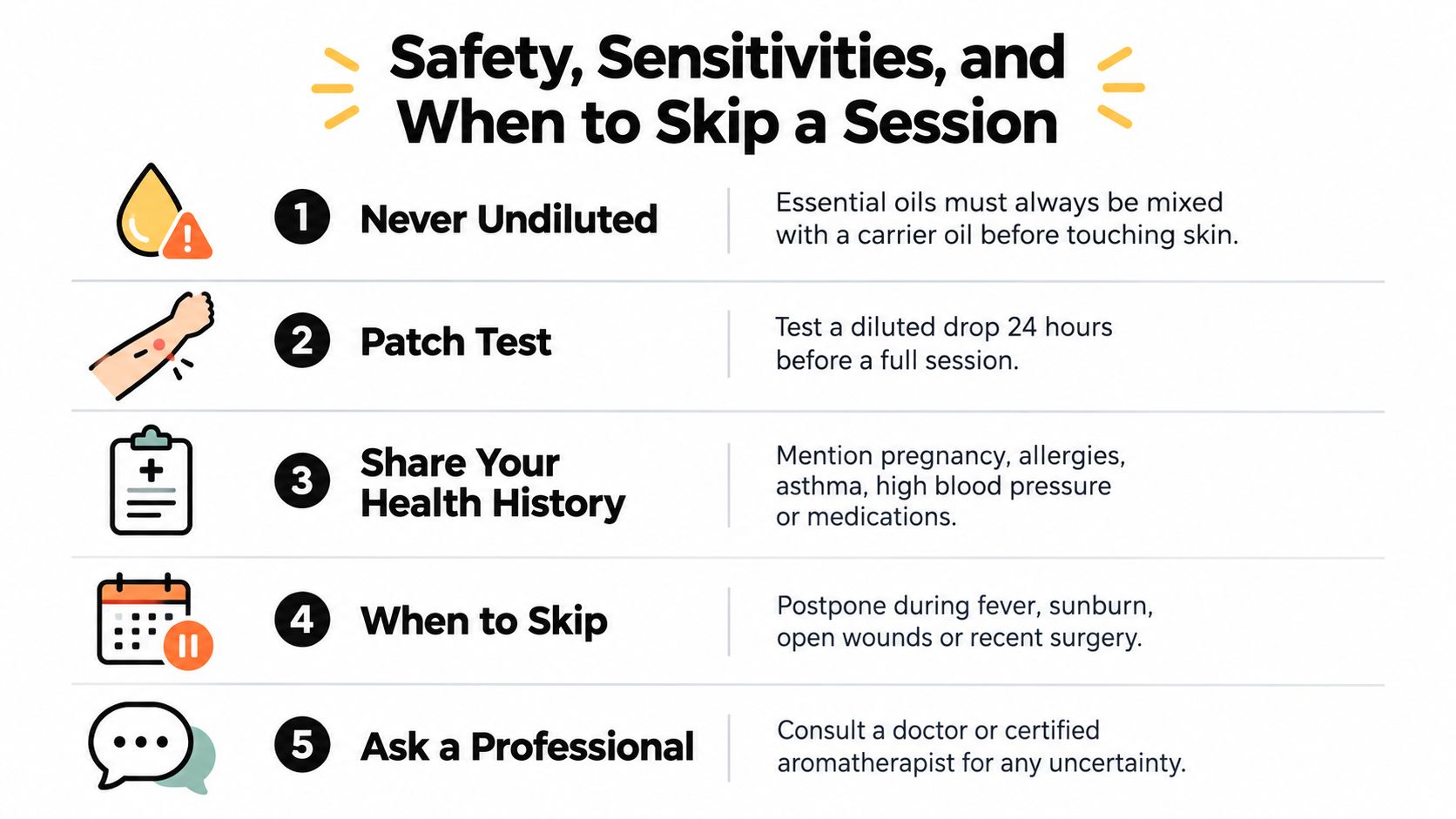
Personalisation matters: a therapist can change the blend, remove fragrance, skip the face or adapt the treatment when you explain what you need.
You're also allowed to change your mind during the session. If the scent feels too strong, your skin feels uncomfortable or the pressure isn't right, say so promptly. The most relaxing treatment is one in which you feel listened to from the first consultation to the final sip of water.
Booking an Aromatherapy Massage in Kuta Lombok
Aromatherapy massage brings together skilled touch and carefully selected essential oils. It uses topical application and inhalation as part of a multi-sensory ritual, but the evidence supports it as complementary relaxation rather than a stand-alone medical treatment. The best experience comes from respecting the safety boundaries, choosing a scent you genuinely enjoy and telling the therapist how you want the session to feel.
For travellers staying around Gerupuk, Mandalika, Tanjung Aan or central Kuta Lombok, booking can become part of the day rather than another task to squeeze between activities. Allow time for a short consultation, oil selection and a gradual transition into the room. Ask about the available duration options when reserving, and request a pregnancy-safe or scent-free alternative if needed.
At GLAZE, House of Wellness, Jl. Raya Kuta No. 20, Kuta, Central Lombok, NTB 83573, the treatment menu includes Balinese massage, deep tissue, aromatherapy and reflexology. You can also combine a wellness visit with a cleansing, hydrating or anti-aging facial, manicure, pedicure and nail care, or time at the on-site specialty coffee and matcha bar. GLAZE offers wellness treatments rather than injectables, laser procedures or surgery.
Reserve ahead during busy travel periods, especially if you're planning the treatment around a beach day or an evening in Mandalika. Drink water before and after, avoid packing the next hour with demanding activities and let the scent remain part of the afternoon as you move back into Lombok's warm, unhurried rhythm.
Book your treatment at GLAZE through the online reservation process, and note your preferred aroma, pressure and any sensitivities when you reserve. A calm consultation and a carefully adapted blend will help you step out of the Kuta Lombok heat and into a slower afternoon.
GLAZE - House of Wellness offers aromatherapy, Balinese massage, deep tissue, reflexology, facials, nail care, relaxation treatments and an on-site coffee and matcha bar in Kuta Lombok. Visit GLAZE - House of Wellness to choose your treatment and book a restorative island pause.
- aromatherapy massage
- spa Kuta Lombok
- essential oils
- wellness Lombok
- GLAZE spa