What Is Balinese Massage: A Kuta Lombok Guide
Discover what is Balinese massage, its deep-tissue techniques, and recovery benefits. Book your restorative session at GLAZE in Kuta Lombok today.
Balinese massage is a holistic, oil-based full-body treatment that blends deep-tissue acupressure, gentle stretching and aromatherapy to relieve muscular tension and sensory fatigue. Its layered tradition combines influences from Chinese, Indian, Javanese and Balinese healing practices over roughly a millennium.
You may be reading this after a flight into Lombok, a surf session near Kuta Beach or a warm afternoon exploring Mandalika. Your shoulders feel tight, your legs are heavy and your senses are still catching up with the island. Balinese massage offers a considered way to slow down, release travel tension and return to your holiday feeling more present.
For visitors in Kuta Lombok, the appeal is its balance. It can feel soothing enough for deep relaxation, yet purposeful enough for post-surf tightness and the physical fatigue that comes with moving between Tanjung Aan, Selong Belanak and the coastal roads of Central Lombok.
Table of Contents
- The Restorative Power of Balinese Massage
- Ancient Origins and Layered Healing Traditions
- Signature Techniques and Physical Sensations
- Choosing the Right Massage for Your Body
- The GLAZE Wellness Experience in Kuta Lombok
- Preparing for Your Session and Aftercare
The Restorative Power of Balinese Massage
After a morning in the sea, the body often tells a clearer story than the itinerary. Paddling, balancing, carrying a board and sitting on a scooter can leave the forearms, hips, calves and lower back feeling worked. Add sun exposure, a long flight or a day spent walking around Mandalika, and even an active traveller may want something more substantial than a light, fleeting rub.
Balinese massage is designed as a full-body experience rather than a narrow treatment for one area. It combines flowing strokes, kneading, pressure-point work, gentle stretching, reflexology and aromatherapy, creating a sequence that moves between calm sensory care and firmer muscular attention. A detailed overview of Balinese massage describes this combination as a holistic treatment shaped by several Asian traditions.
A reset after travel or surf
The treatment usually uses warm oil, which allows the therapist's hands to glide smoothly across the skin. That continuous rhythm can feel especially welcome after a flight, when the body has been still for too long, or after time in the ocean, when the muscles have been active and the mind has remained alert.
The pressure is generally medium to firm, sitting between a classic Swedish massage and a more targeted deep-tissue treatment. It isn't meant to feel like punishment. You should be able to breathe comfortably, communicate throughout the session and ask for a softer or firmer approach whenever needed.
Practical rule: Choose Balinese massage when you want your body to feel attended to as a whole, not simply one knot worked over and over.
A session can become part of a well-paced Lombok day. You might spend the morning at Tanjung Aan, enjoy a quiet treatment in Kuta Lombok, then take coffee or matcha before dinner. The result is less about rushing back into the next activity and more about giving your body a deliberate pause.
Ancient Origins and Layered Healing Traditions
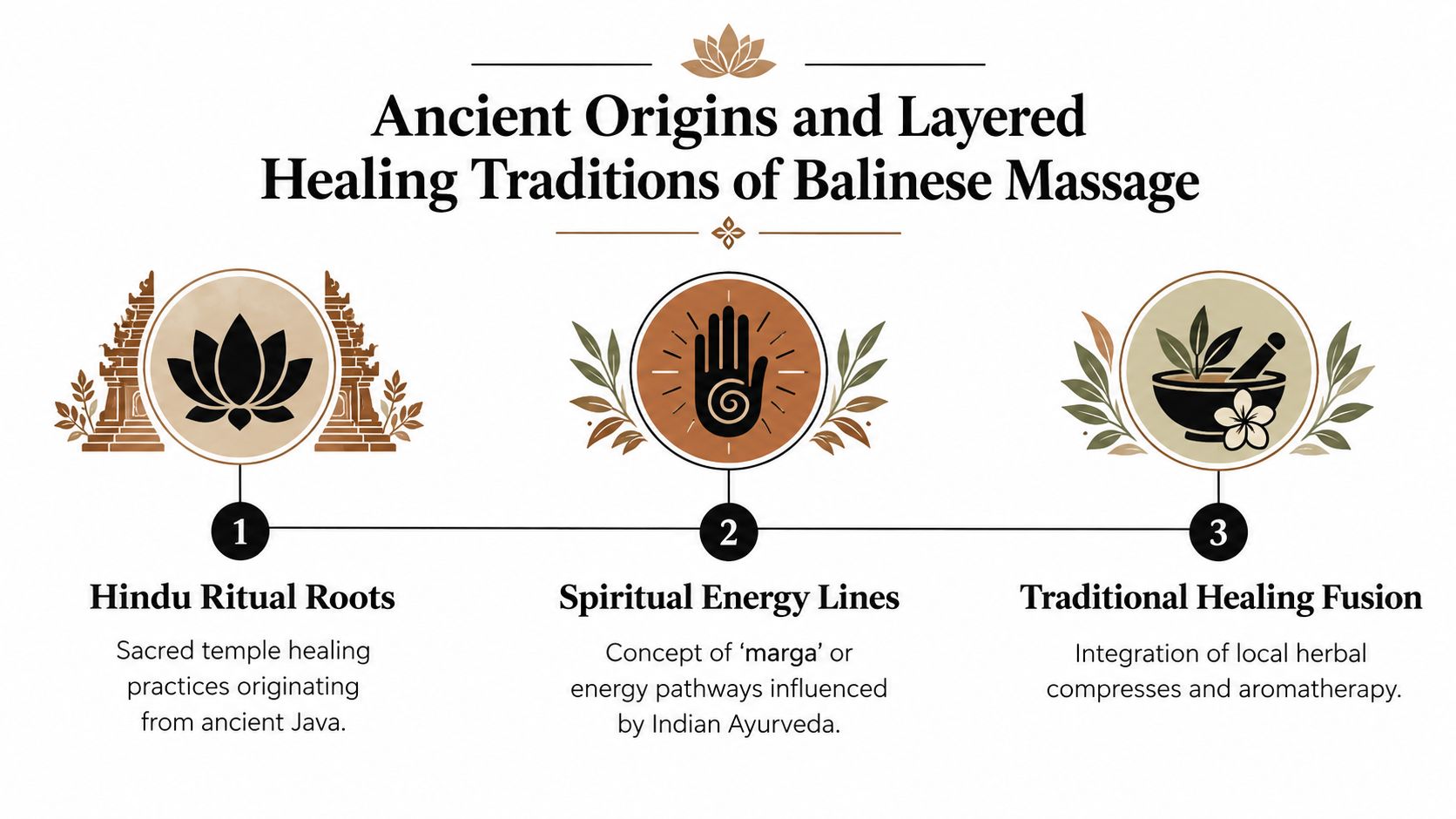
Balinese massage feels distinctive because it isn't built around one isolated technique. It is widely described as a fusion of Chinese, Indian, Javanese and Balinese influences, with local healing knowledge shaping the way those traditions are expressed through touch.
Some modern histories place Hindu and Buddhist influences in Indonesia in the 8th to 9th centuries, while Chinese acupressure and reflexology influences are sometimes placed by the 10th century. These dates help explain the treatment's long cultural layering, but they shouldn't be read as a single, fixed origin story. Balinese massage developed through the meeting of traditions, communities and local practice.
From oral tradition to recognised treatment
Balinese healing methods were first documented by Dutch physicians and anthropologists in the 1930s. This was an important shift because practices that had largely been passed through oral tradition entered written records, making them easier for international wellness audiences to recognise and describe. The history and modern presentation of traditional Balinese massage also notes familiar ritual elements such as a foot wash, essential oils and formalised 90-minute traditional treatments.
That history matters when you settle onto the massage table. The therapist isn't just alternating random strokes. The familiar experience of feet, legs, back, shoulders, pressure points, oil and stretching reflects a layered system that has become legible across global spa settings while retaining its Indonesian identity.
The word “holistic” can sound vague, so it helps to make it practical. In this context, it means the session considers broad physical sensations, rhythm, touch, scent and rest together. A Balinese massage can therefore feel both grounded in muscular work and shaped by a slower, more mindful ritual.
Signature Techniques and Physical Sensations
A Balinese massage often begins gently, allowing you to settle before the pressure becomes more focused. Some treatments start with a foot wash, followed by work from the feet upward through the legs, back and front of the body. Contemporary descriptions of the traditional treatment commonly include warm oil, long gliding strokes, kneading, skin rolling, acupressure and gentle stretching.
What happens on the table
The tactile experience may move through several distinct sensations:
- Long gliding strokes: These create a smooth, continuous rhythm and spread oil across larger areas of the body.
- Kneading and skin rolling: These feel more textured and focused, particularly around areas of muscular tightness.
- Thumb and palm pressure: Sustained pressure is applied to trigger points and acupressure points, with the intensity adjusted to your response.
- Gentle stretching: Small assisted movements add a sense of length and mobility without turning the session into a vigorous exercise routine.
- Reflexology-style footwork: Attention to the feet and lower legs can feel grounding after walking, surfing or travelling.
The treatment's technical character comes from this mixed mechanical load. Sustained thumb or palm pressure works specific points, while rolling and kneading warm the superficial tissues and encourage blood flow. This explanation of the treatment's mechanical mix helps clarify why people choose it for tension, jet lag and post-activity recovery, rather than treating it as a purely light relaxation service.
Firm does not mean fixed
Pressure should remain collaborative. If your shoulders need more attention but your calves feel sensitive after surfing, tell the therapist. You can also mention sun-exposed skin, areas you'd prefer to avoid and any sensitivity to essential oils before the treatment begins.
The oil is part of the technique, not merely a finishing touch. It reduces friction during flowing strokes and adds an aromatic layer to the experience. If you prefer less scent or a different pressure level, say so early. Clear communication gives the therapist useful information and makes the treatment feel more personal.
Choosing the Right Massage for Your Body
Spa menus can make several treatments sound similar, particularly when you're booking quickly between a beach visit and dinner. The simplest distinction is intent. Balinese massage suits a traveller who wants a full-body, oil-based treatment with a firm but flowing rhythm. Swedish massage is usually associated with lighter, smoother relaxation work, Thai massage with assisted stretching and compression, and deep tissue massage with more concentrated muscular focus.
| Modality | Pressure & Style | Best Suited For |
|---|---|---|
| Balinese massage | Medium to firm, oil-based, full-body work combining flowing strokes, kneading, acupressure and stretching | Travellers seeking relaxation with meaningful tension release, including after surfing or a long journey |
| Swedish massage | Generally lighter, flowing strokes with a relaxation-led rhythm | People who prefer a gentler sensory experience and broad relaxation |
| Thai massage | Stretching, compression and assisted movement, often with little or no oil and loose clothing | Those who enjoy active stretching and a more movement-focused treatment |
| Deep tissue massage | Firmer, more targeted pressure directed towards selected areas of muscular tension | Guests requesting concentrated work rather than a balanced full-body ritual |
A simple decision guide
Choose Balinese massage if you want to feel calm while still receiving focused pressure through the legs, back and shoulders. It is a natural fit after a surf lesson, a long flight or a day moving between Kuta Beach and Tanjung Aan.
Choose deep tissue if one particular area is your priority and you want a more targeted session. At GLAZE, deep tissue massage is available alongside Balinese massage, aromatherapy and reflexology, so you can discuss the day's needs before selecting.
Choose Swedish massage when relaxation and gentle rhythm matter more than firm pressure. Choose Thai massage when you actively enjoy assisted stretching, compression and a treatment that may be performed through loose clothing rather than on oiled skin.
Before you reserve: Tell the spa whether you prefer relaxation-first, tension-release or sensory wellness. Those words give the therapist a clearer starting point than simply asking for “a strong massage”.
If you're uncertain, describe your day instead. “I surfed this morning and my shoulders are tired, but I want to sleep well tonight” gives a better guide to treatment choice than choosing from a name alone.
The GLAZE Wellness Experience in Kuta Lombok
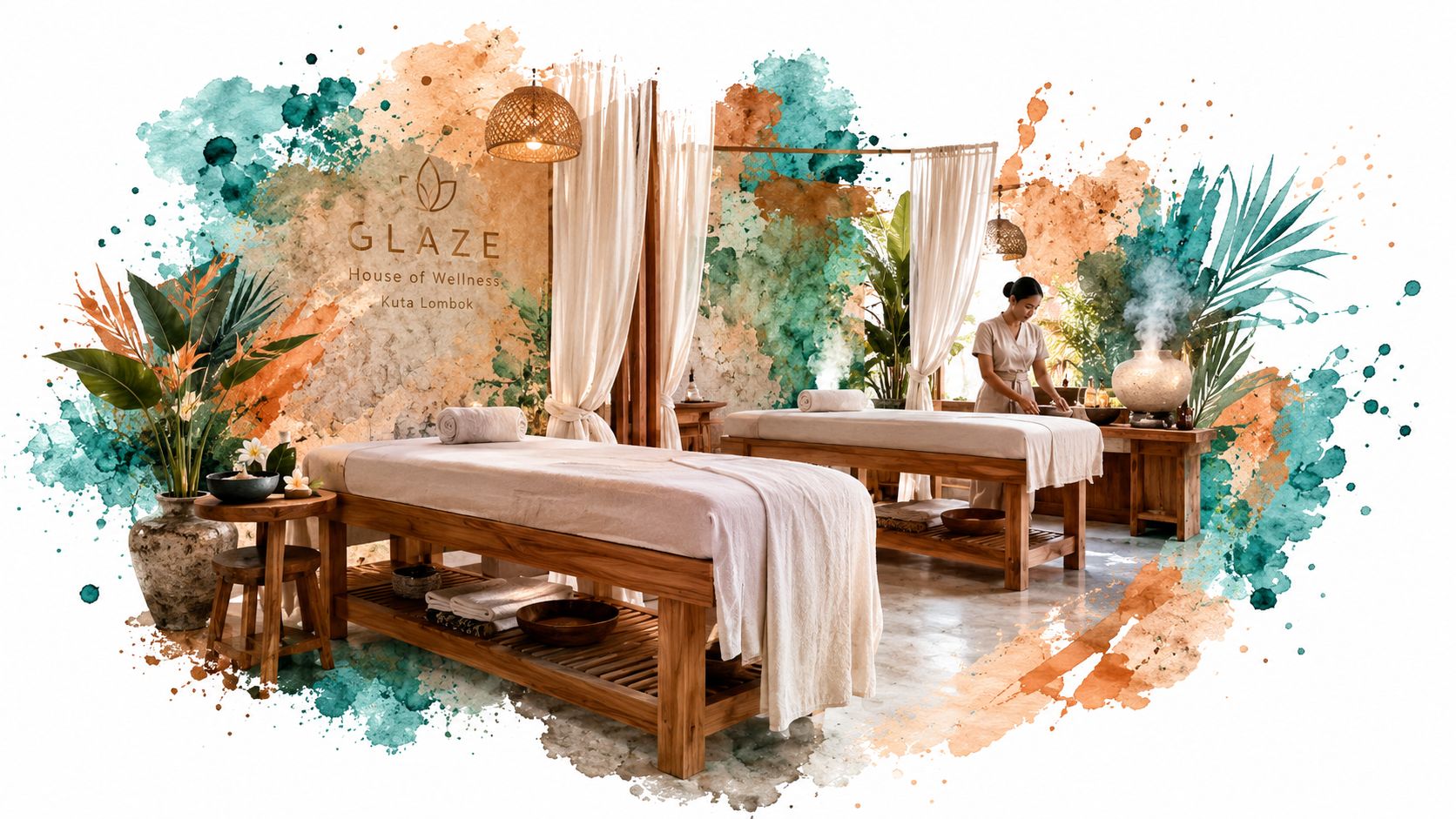
At GLAZE, House of Wellness, the treatment begins before the first stroke. The minimalist, design-driven space is intended to feel calm and unhurried, with a signature wall of frosted glass blocks that softens the surroundings and supports quiet focus.
You arrive from the bright roads of Kuta Lombok and gradually leave the day behind. The pace is steady, the setting is uncluttered and the experience allows room to communicate what your body needs. For a traveller dividing time between Kuta Beach, Mandalika and the southern beaches of Lombok, that transition can be as valuable as the massage itself.
Bodywork followed by a slower pause
The massage menu includes Balinese massage, deep tissue, aromatherapy and reflexology, giving you room to choose between full-body pressure, targeted work, scent-led relaxation or foot-focused care. GLAZE also offers facials centred on cleansing, hydration and anti-ageing care, plus manicure, pedicure and nail care for guests planning an evening out or a special occasion in Central Lombok.
The on-site specialty coffee and matcha bar extends the visit beyond the treatment room. You can choose a coffee or matcha, or continue gently with fresh coconut and herbal tea. That café element creates a natural pause before returning to a scooter, a beach plan or an evening meal.
The address is GLAZE, House of Wellness, Jl. Raya Kuta No. 20, Kuta, Central Lombok, NTB 83573. It's a practical stop for visitors staying around Kuta Lombok and a considered wellness destination for domestic guests who want massage, skincare, nail care or a quiet café setting in one place.
Preparing for Your Session and Aftercare
A little preparation makes the treatment more comfortable. Drink water during the day, avoid arriving after a heavy meal and allow enough time to settle before the appointment. Wear clothing that is easy to change out of, and mention your preferred pressure, any tender areas and any sensitivity to oils or fragrance.
If you're sunburnt, unusually sore or recovering from a recent injury, tell the therapist before the session begins. You can request gentler work or avoid certain areas. If you're pregnant or think you might be, discuss it with the spa in advance so the treatment can be considered appropriately.
Let the calm continue
Afterwards, avoid treating the massage as a quick stop before intense activity. Gentle walking is usually a more natural follow-on than a demanding padel match, vigorous surf session or hurried journey across the island. Give yourself time to notice how your body feels before committing to the rest of the day.
Hydration and a light refreshment can help you ease back into your plans. At GLAZE, you can continue the pause with fresh coconut or herbal tea at the café, then return to your accommodation, dinner or sunset plans without immediately filling the space with more exertion.
A simple aftercare rhythm works well in Lombok:
- Drink steadily: Keep water nearby rather than waiting until you feel thirsty.
- Move gently: Take an easy walk or rest instead of scheduling strenuous activity straight away.
- Stay attentive: If any pressure felt too intense, share that feedback before your next treatment.
- Protect your time: Reserve a dedicated window for the massage so you aren't watching the clock.
GLAZE - House of Wellness offers Balinese massage alongside deep tissue, aromatherapy, reflexology, facials, nail care and relaxation treatments in Kuta Lombok. Visit GLAZE - House of Wellness to reserve your treatment and give your Lombok itinerary a calm, restorative pause.
- balinese massage
- kuta lombok spa
- lombok wellness
- massage techniques
- glaze wellness